
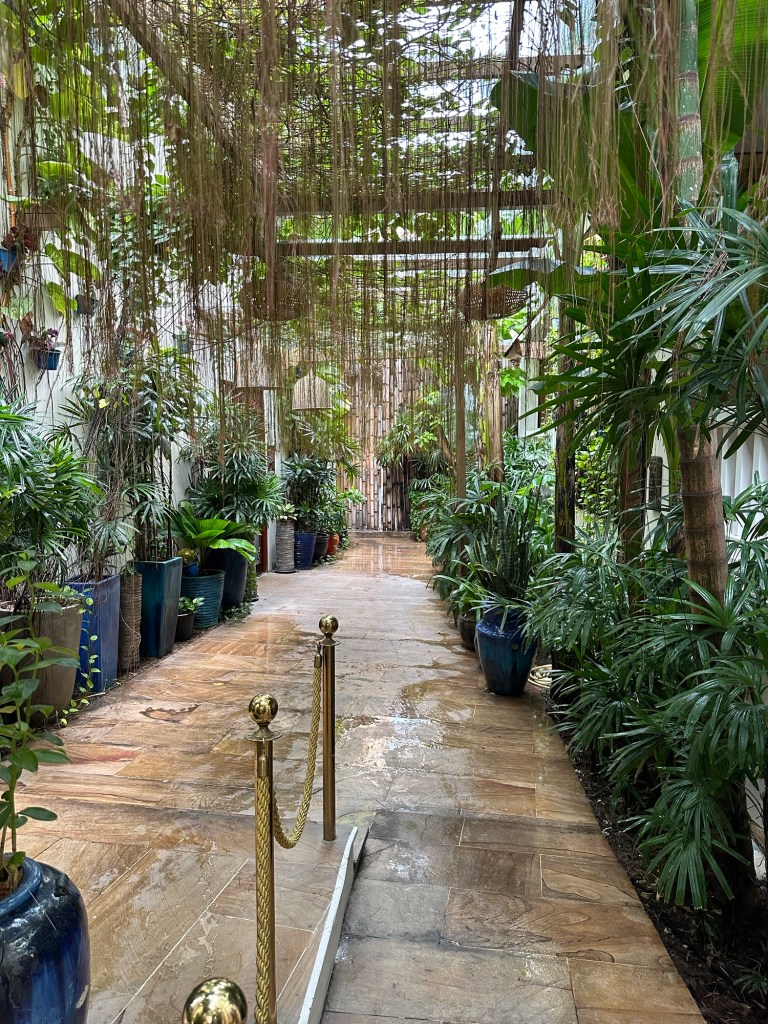
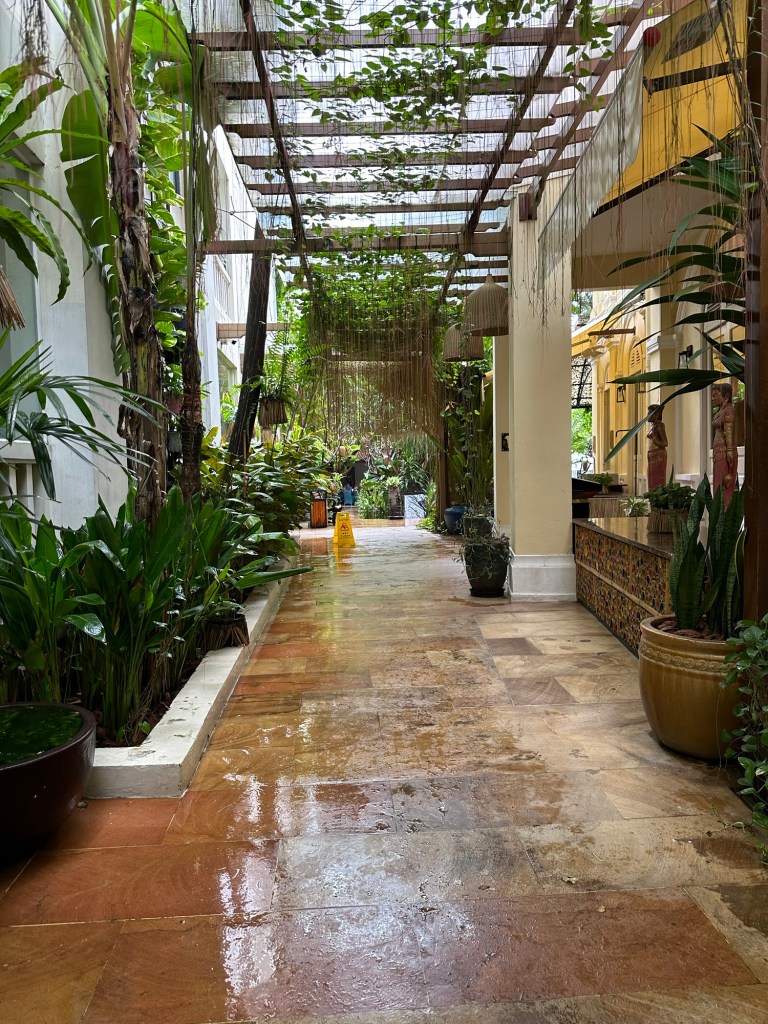
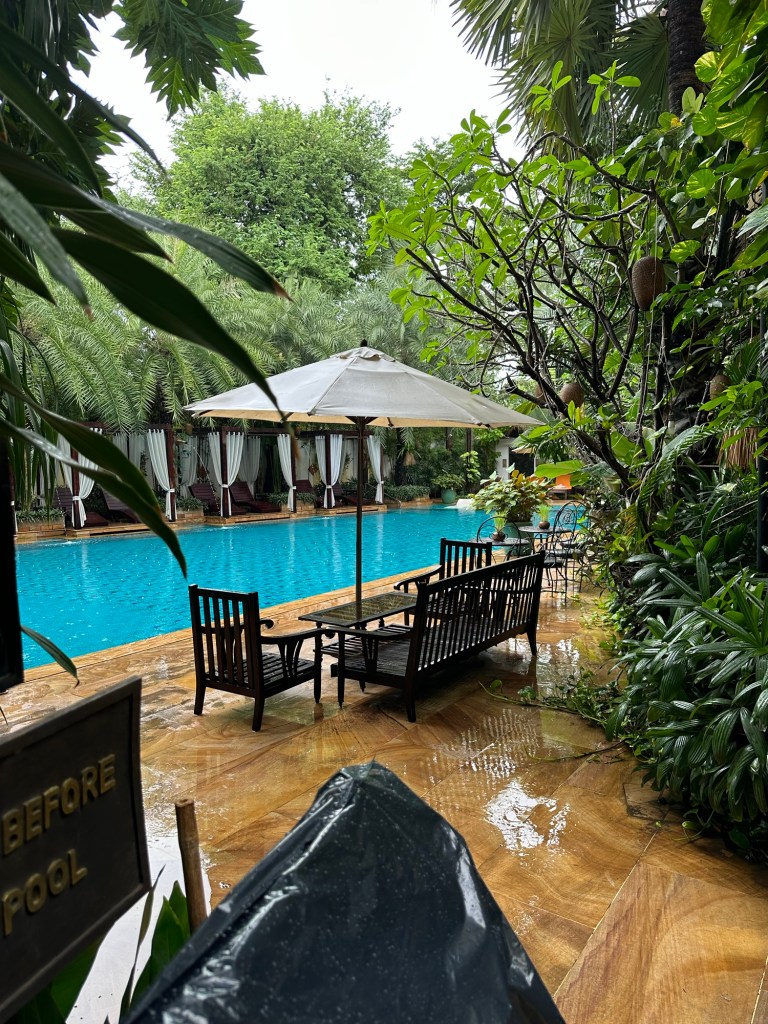
We are staying in a spa hotel that is very central, just across from the Royal Palace. It is one of a number of its type here, very comfortable, lovely setting, and extremely friendly and helpful staff.



Very warm and a little wet this morning. We headed downtown for breakfast, walking along the waterfront that abuts the mighty Mekong River.

The Killing Fields and Prison S-21
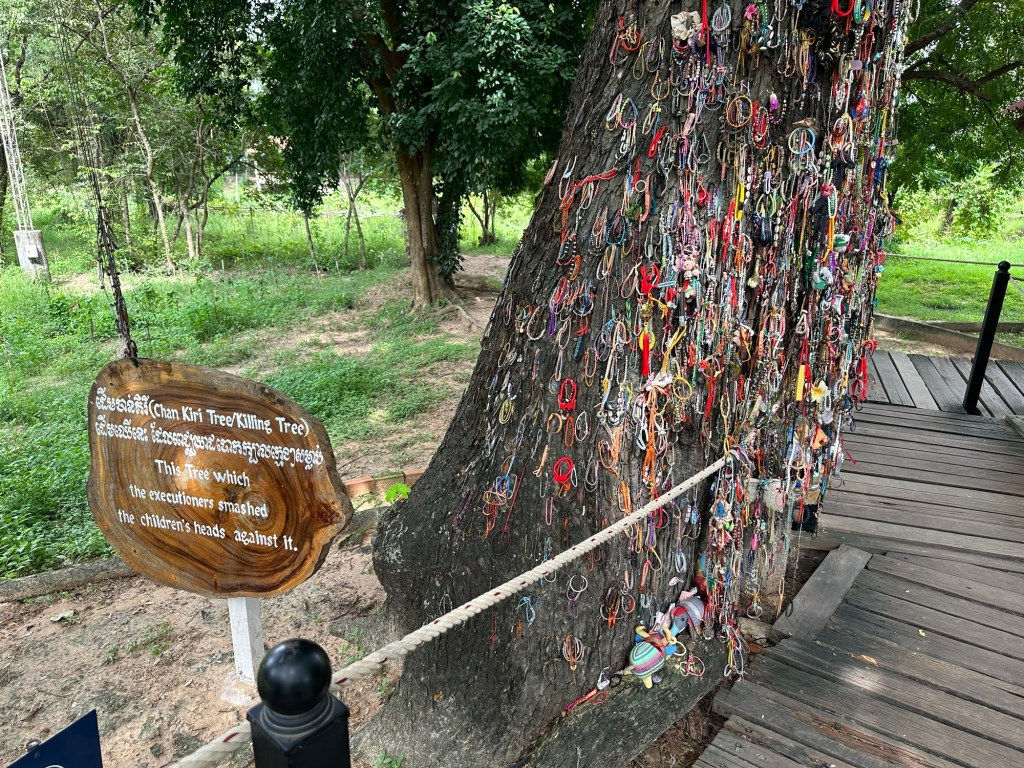
This afternoon we visited the ‘killing fields’ of Choeung Ek Genocide Centre, some 9 miles south of Phnom Penh. The site has a bloody history. Once an orchard and a Chinese cemetery, the Khmer Rouge, led by Pol Pot, turned the place into what became known as the killing fields, where they executed around 20,000 victims. It was used as a killing field between 1975 and 1979 by the Khmer Rouge in perpetrating the Cambodian genocide.
For more information click here to be redirected to the UNESCO World Heritage Convention website.
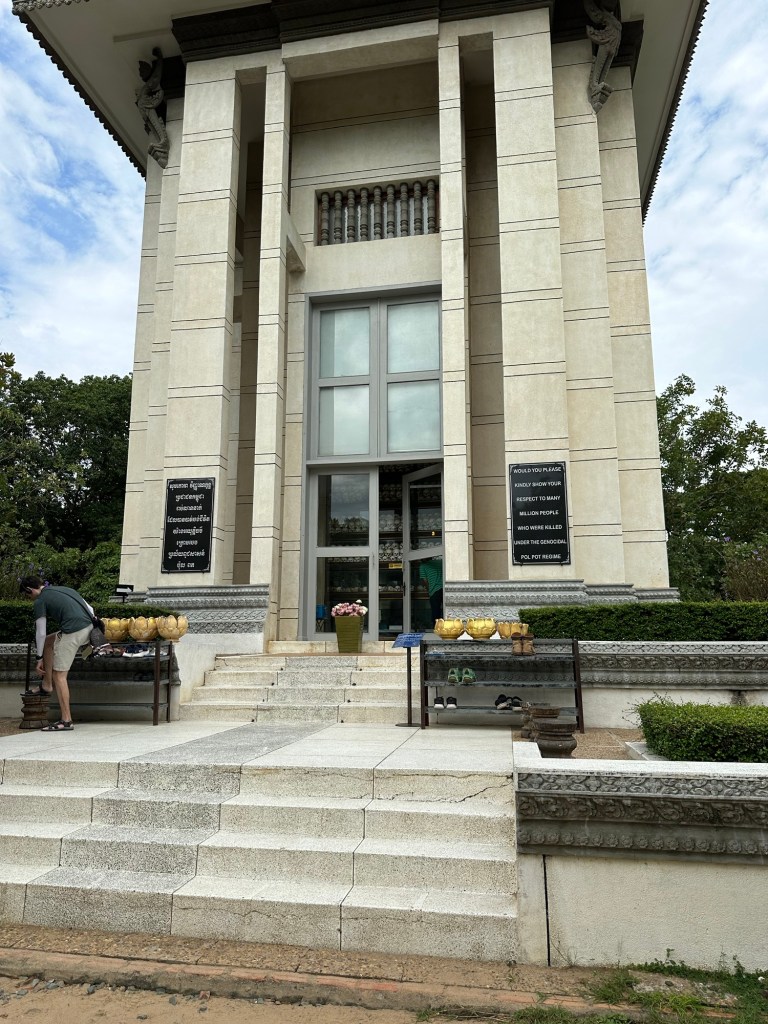

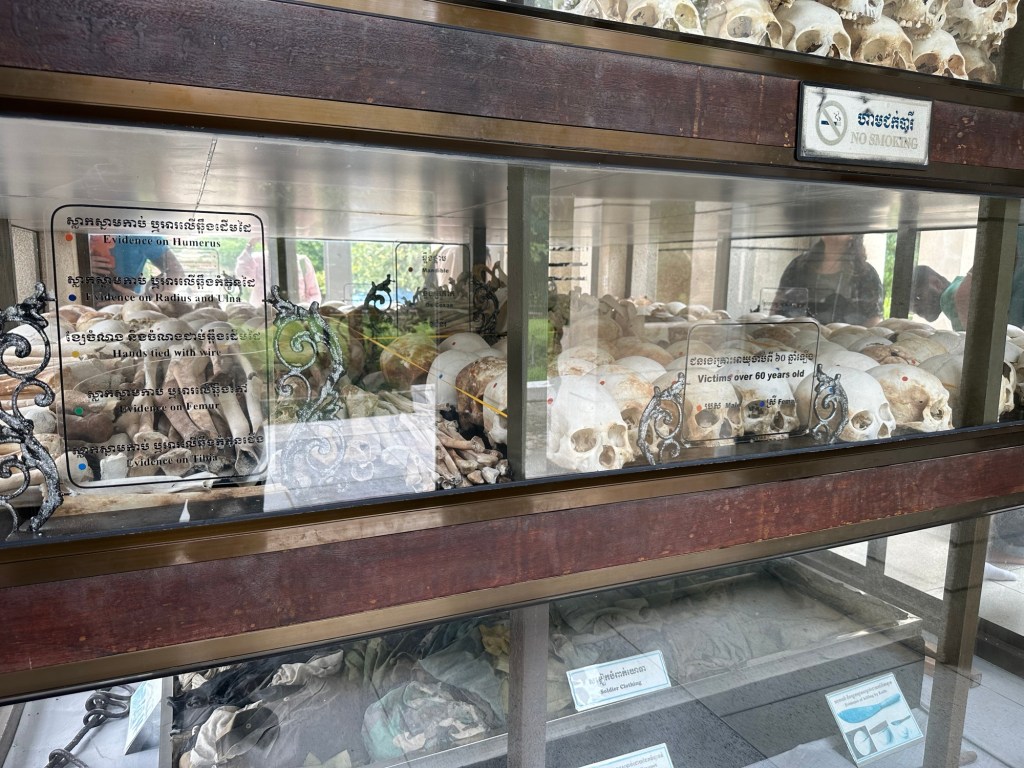
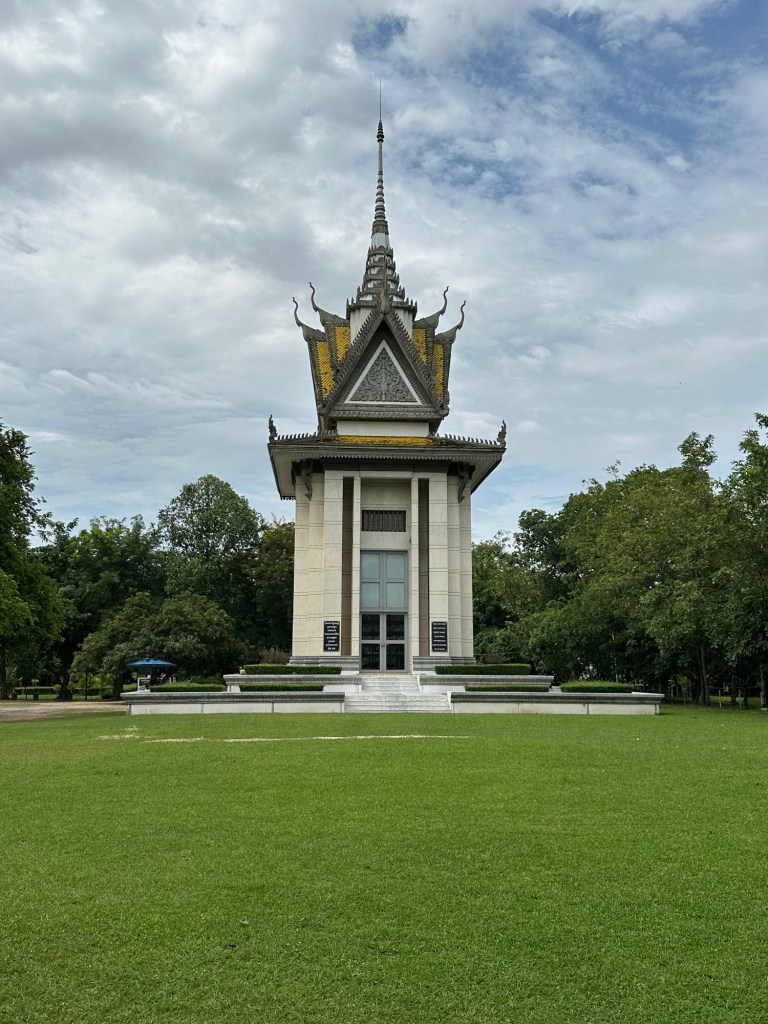
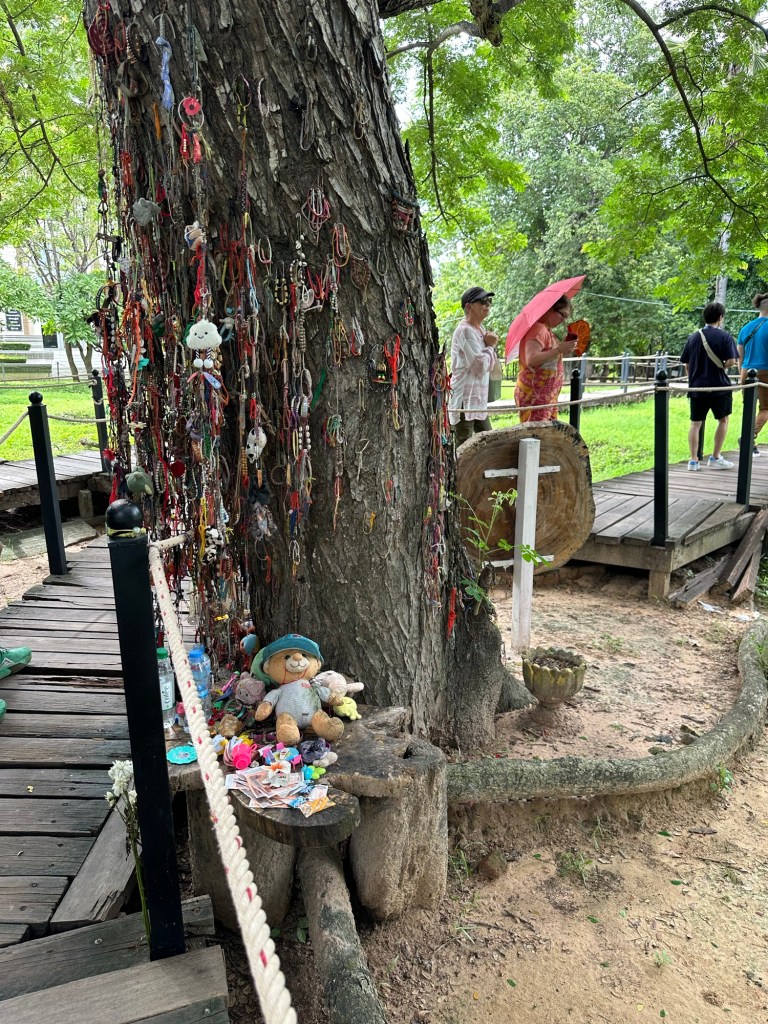

We then moved on to the Khmer Rouge Prison S-21. The core of S-21 prison was established in two adjacent former schools, built in the 1960s. Prisoners of the Khmer Rouge were brought to the complex, photographed, detained, many tortured, interrogated and executed or taken away to be killed at Choeung Ek. Current research estimates that 18,063 men, women and children were detained in S-21.
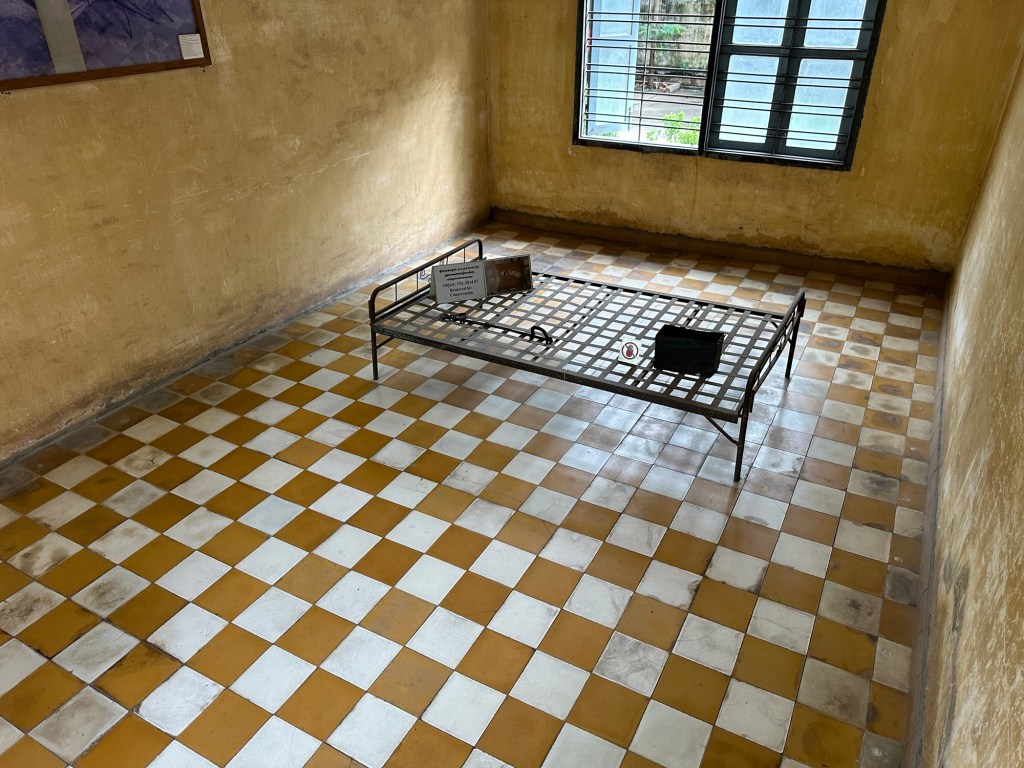
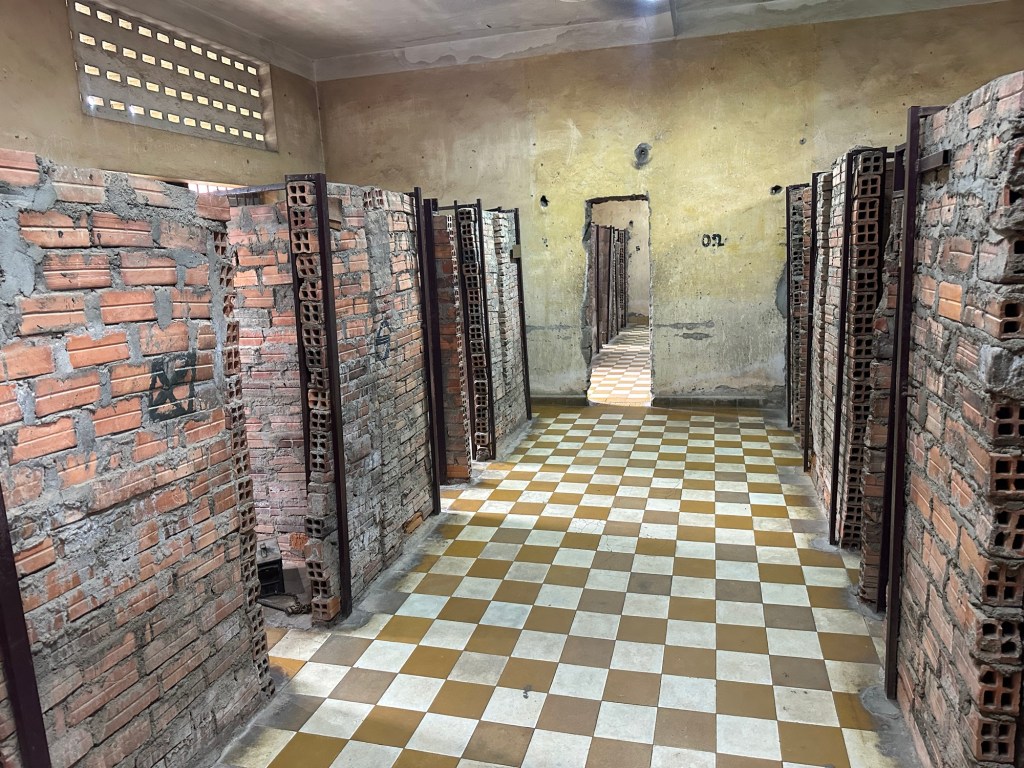

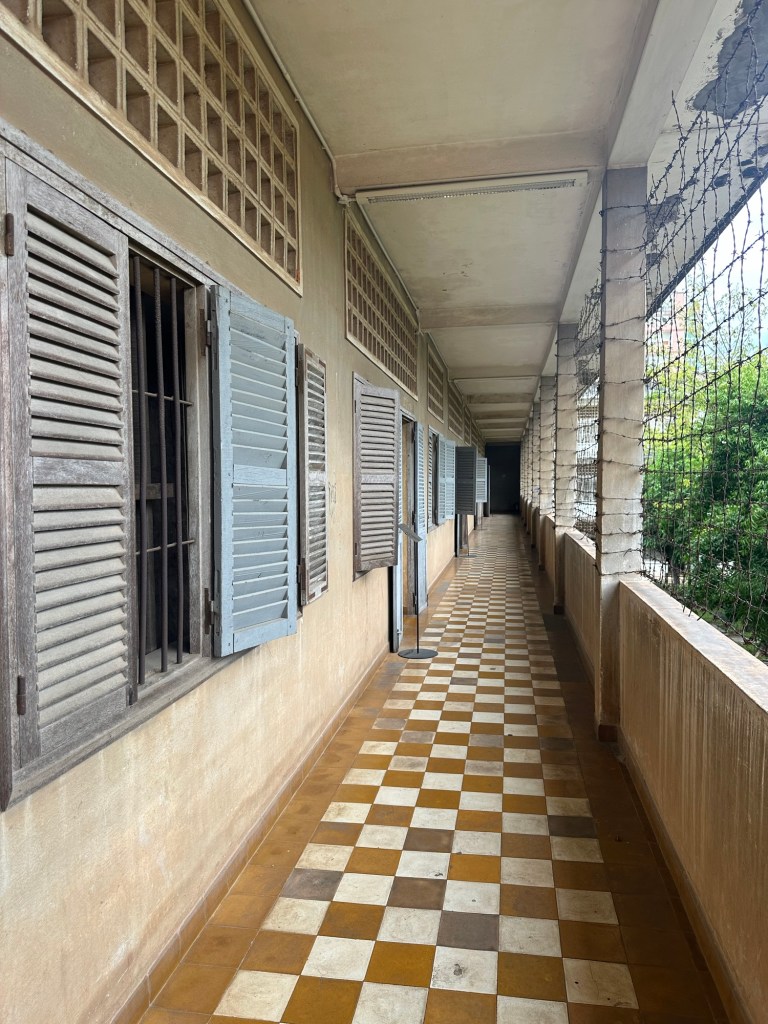
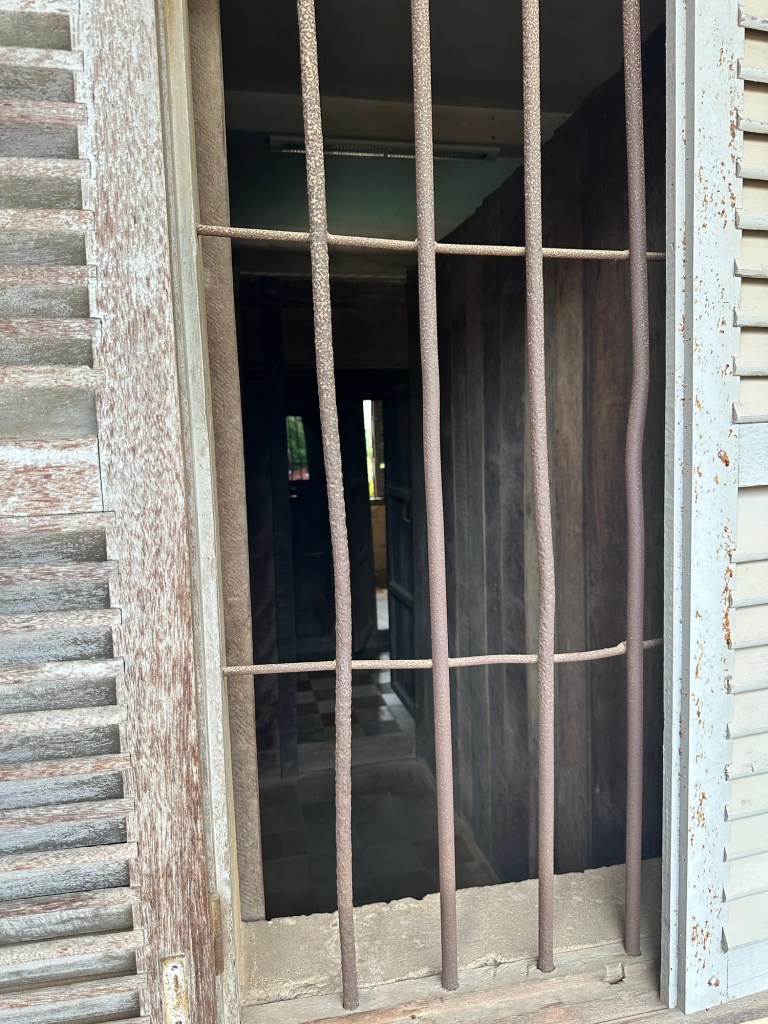
It was a very uncomfortable experience but one we felt we should not shy away from. Our English speaking Cambodian guide made it very clear that Cambodians absolutely view this as the ‘darkest part of their history’, but one that should never be forgotten. Interesting, too, that when the perpetrators were brought to trial, the Cambodian representatives only saw the need to pursue and bring to justice six (6) surviving members of the Pol Pot regime, ‘the masterminds’. This, against the want of the UN. The Cambodian people, he says, have mixed views on this, with many feeling it too time consuming, destructive, and costly, to pursue all involved.
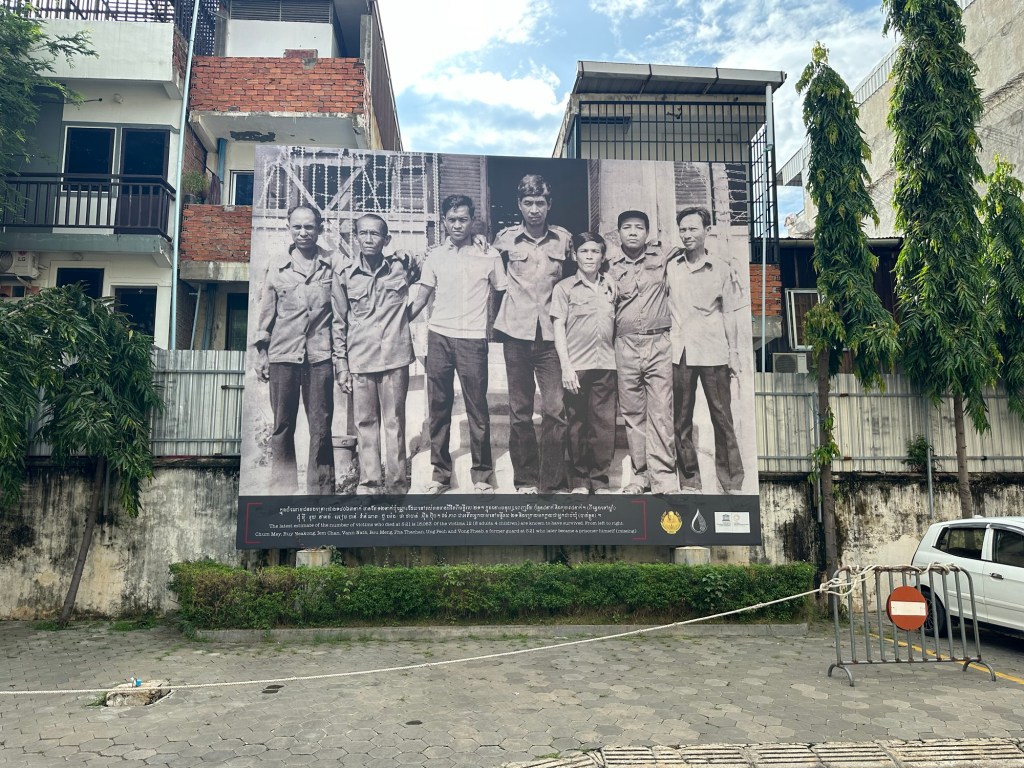
We met Mr Bou Meng, a survivor of Prison S-21. He was an artist and was allowed to survive because he was put to work painting portraits of Pol Pot, the regime’s leader.
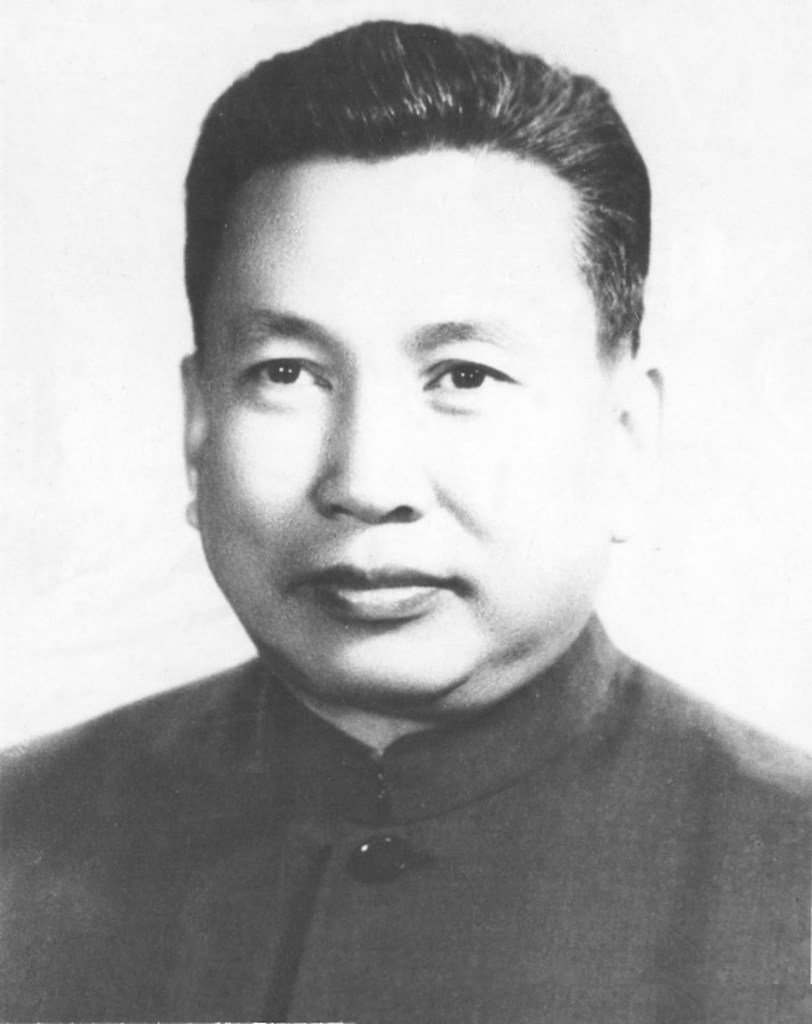
Bou Meng is third from the right on the photograph below, exhibited in large-form at the museum site.

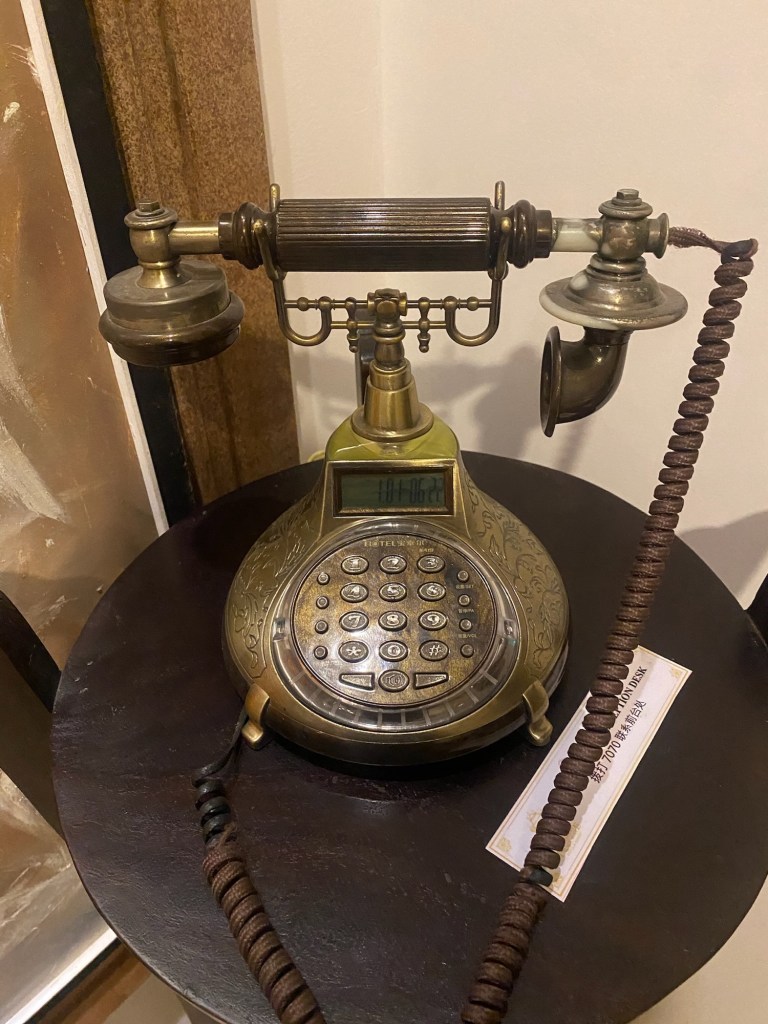
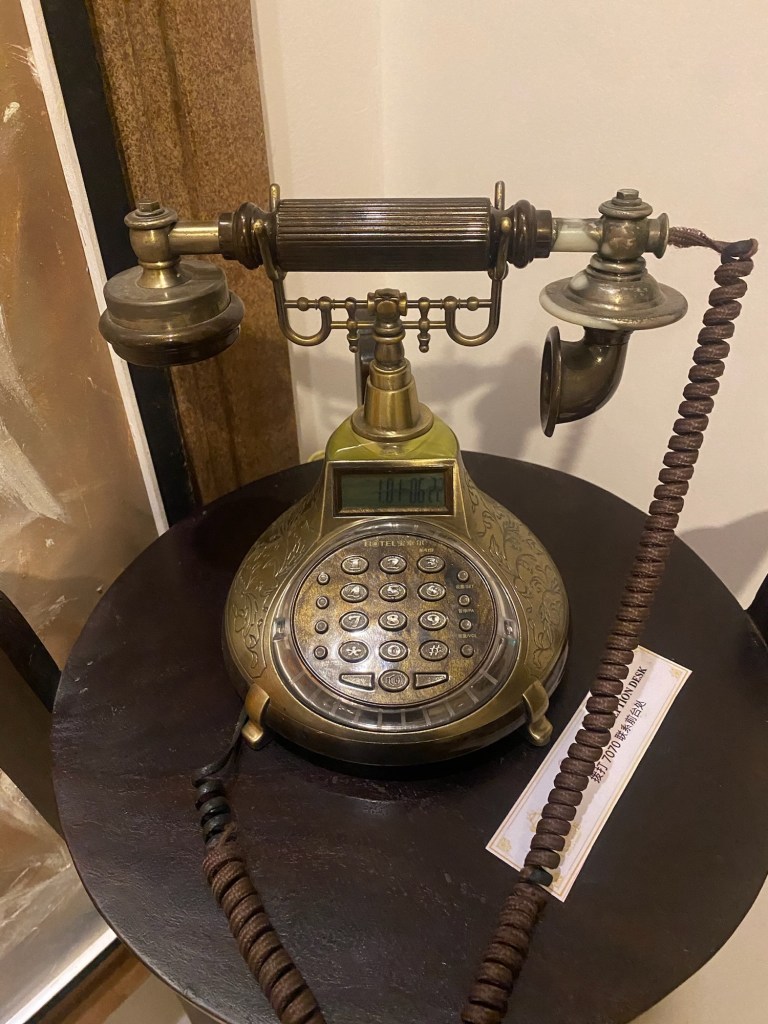
The telephone? I don’t know! It is in the corridor just outside our room, I quite like it. Just as the times marked by the rise and fall of the Khmer Rouge took place in my lifetime, so did technological ‘progress’, from dial-up phones to the iPhone I am using now to aid in posting this daily blog, accessible to the whole world. That is, to those of us fortunate enough to possess such a device.
Bou Meng’s message to the world came at a far higher price. It was notable that continued torment is clearly etched on his face.
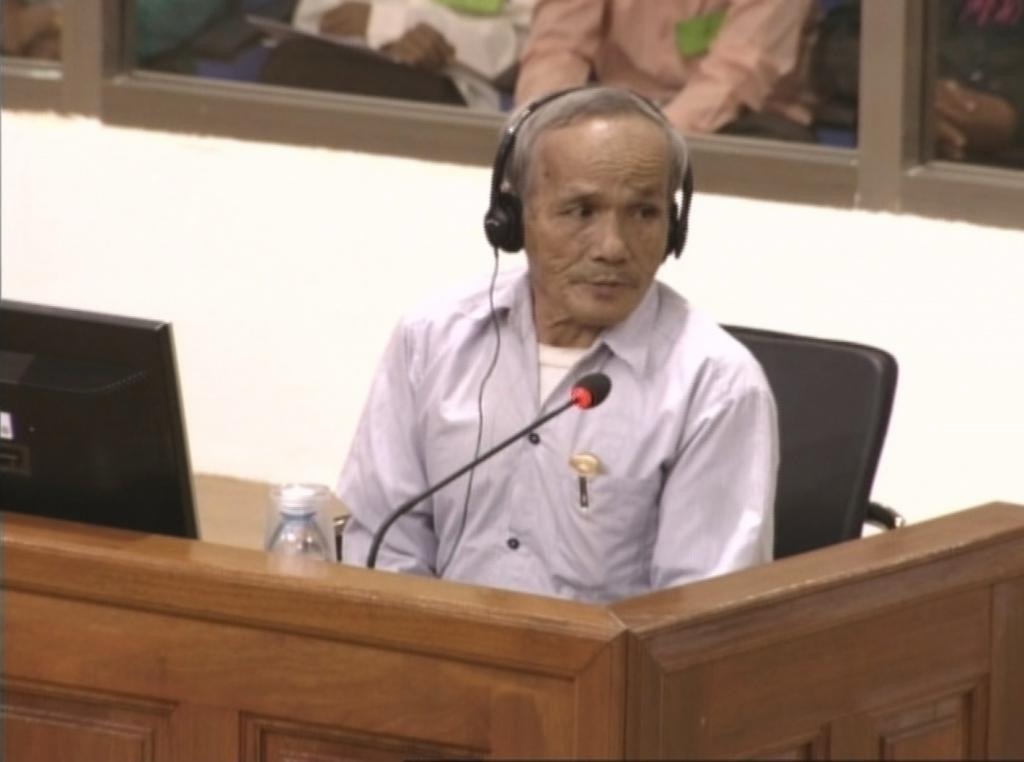
The international court convened in Cambodia to judge the Khmer Rouge for its brutal 1970s rule ended its work on Thursday 22 September 2022, after spending $337 million and 16 years to convict just three men of crimes after the regime caused the deaths of an estimated 1.7 million people.
Return to home page

 A Dragon Apparent
Leave a comment