
Another eagerly anticipated day today, the mighty Mekong River delta. A hurried breakfast and then down to meet our guide for the day, Matt.
Matt’s English is very good, which is just as well because our Vietnamese is zero. As in zero! He is clearly passionate about the river and the environmental damage caused to it by environmental change, yes, but also the impact of dam building further upstream. A little research en route gave us a better understanding of just what Matt was saying.
According to the Stimson Centre, a leading voice on urgent global issues, for the past three decades, every tributary in every country of the Mekong is now blocked by a dam, posing a significant reduction in fish migration capabilities and downstream sediment distribution. A report by the Centre, issued in 2024, states that currently, 745 dams are complete or under construction on the mainstream and tributaries of the Mekong Basin rendering the once connected, natural river system into a highly engineered watershed utilized for hydropower production, irrigation, urban water supply, and flood control.
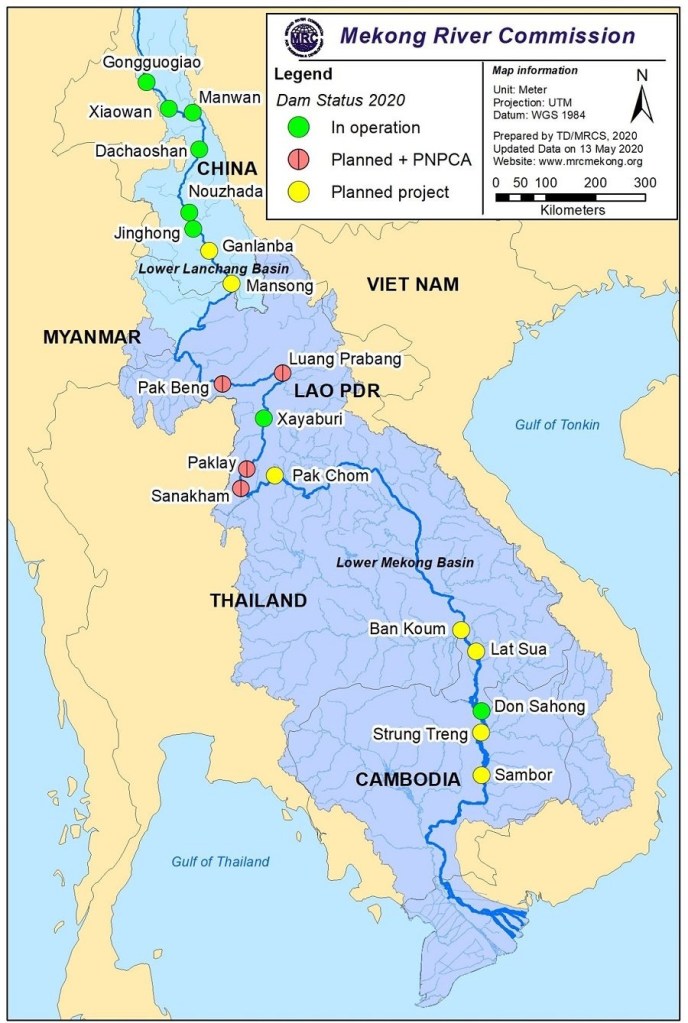
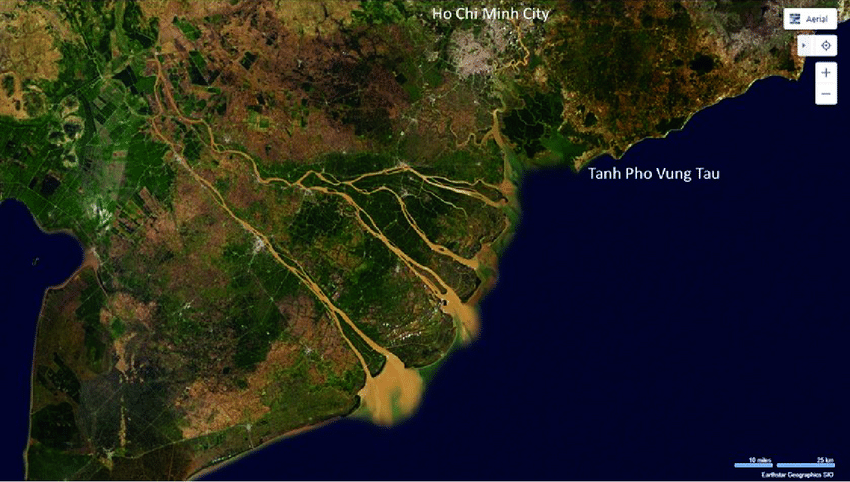
The Mekong begins in Lasagongma Spring, which is in the plateaus of Tibet. It flows through China, Myanmar, Laos, Thailand, Cambodia, and Vietnam. It is 4,350 km long and it meets the South China Sea at the Mekong Delta, our destination now.
Saigon or Ho Chi Minh?
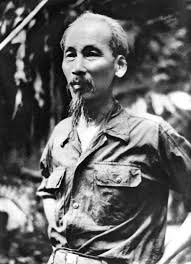
We also had an interesting conversation with Matt on the question of Saigon (Vietnamese: Thành phố Hồ Chí Minh) or Ho Chi Minh City (Vietnamese: Sài Gòn). Saigon’s name was changed to Ho Chi Minh City, to honor the revolutionary leader who had declared independence back in 1945.
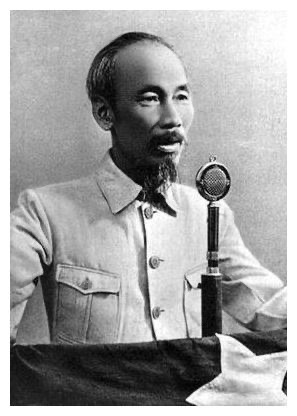
It would seem the name change was not voluntary on the part of those living in the South; it was a statement of the North’s success. In simple terms, the Vietnam War was between the North and South of Vietnam. Communist allies, such as China and the Soviet Union, supported the former, while anti-communist troops, such as America and Australia, helped the latter. In 1975, the North of Vietnam won the war, and the name change happened.
Nowadays, this does not seem be such a sensitive matter, the two names are not used so much to make any kind of political statement; they are, more so, alternate ways of referring to the city, and synonymous.
Matt suggested that maybe half of the population of the city use ‘Ho Chi Minh City’ and the other half refer to it as ‘Saigon’. Matt says usage is more a question of self-identity. Notably, the airport code itself is SGN.
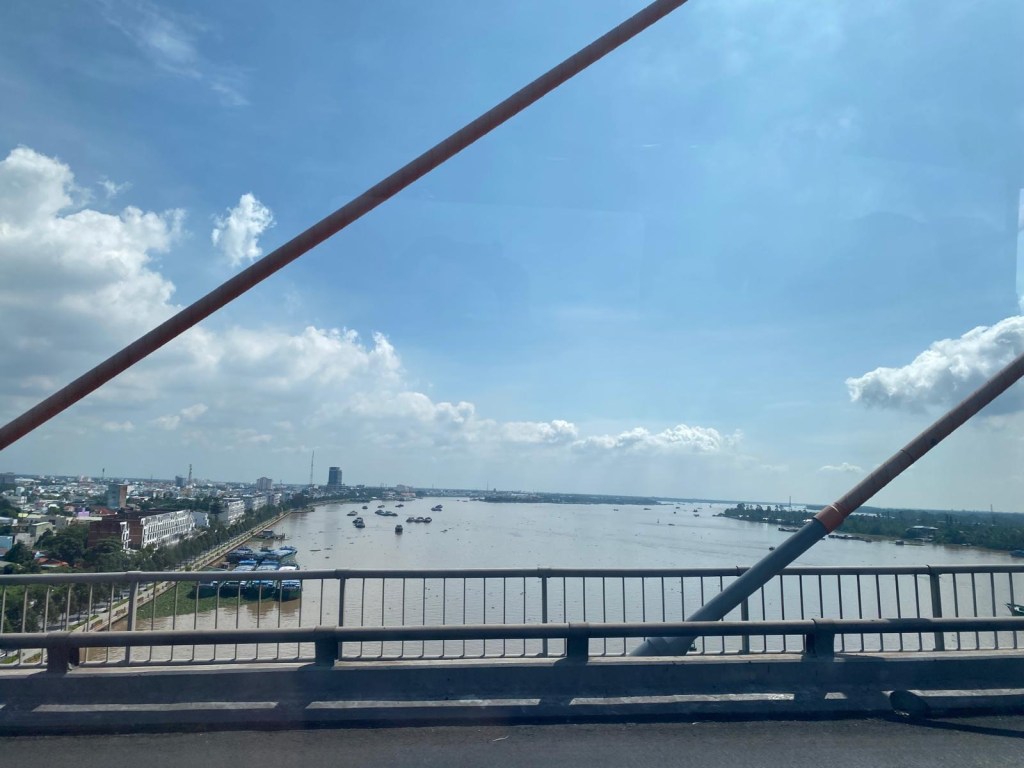
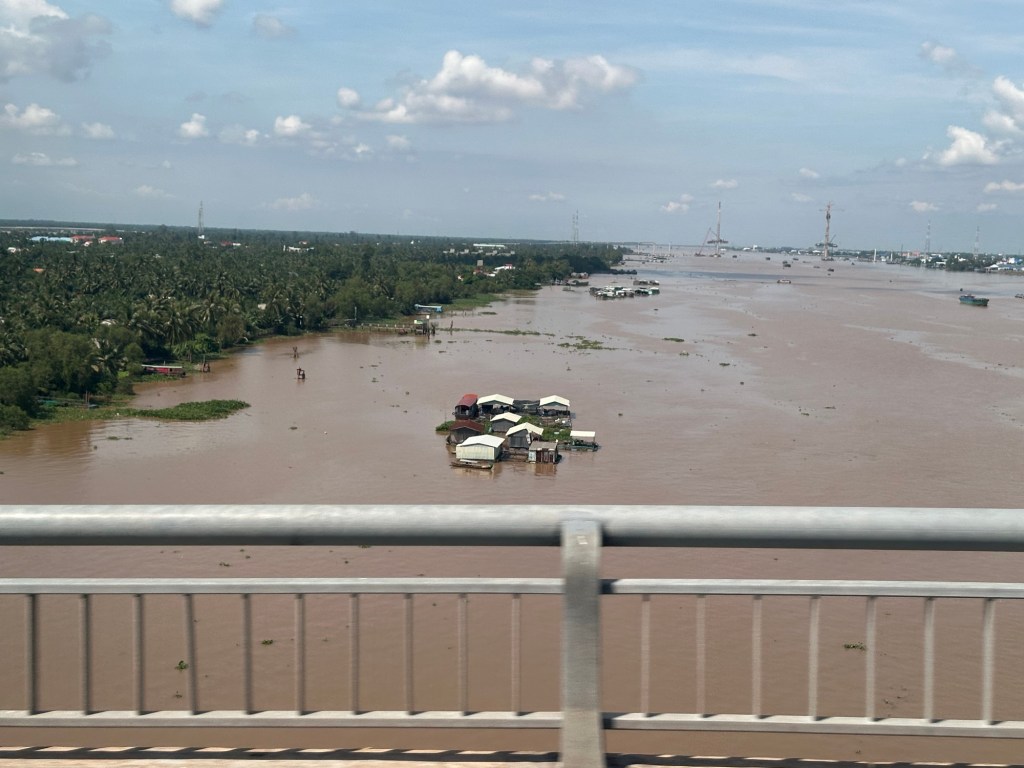
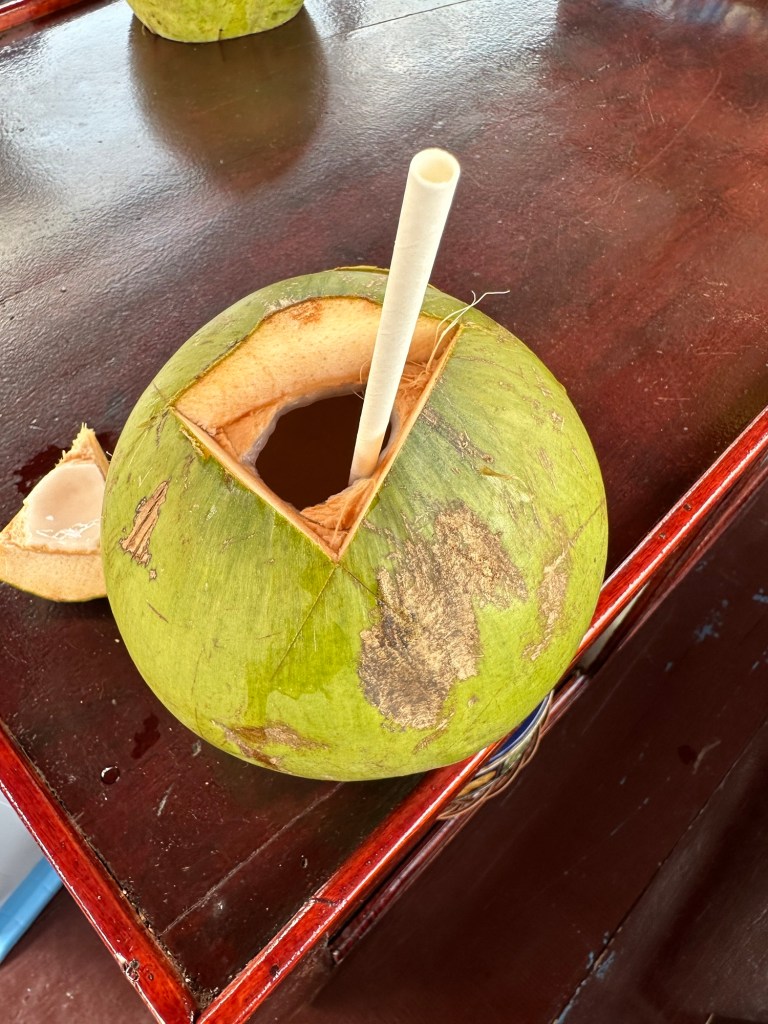
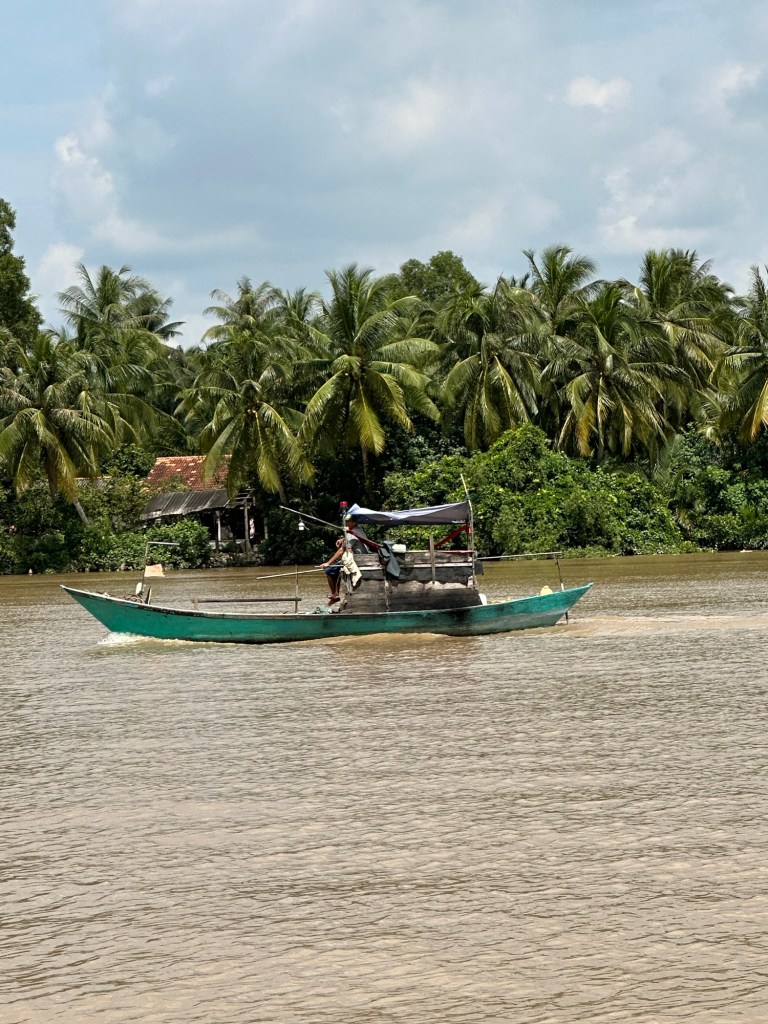
Our journey down the Mekong River was now underway. Refreshed by coconut juice, straight from the… coconut. Sure beats anything out of a tetra pack, make no mistake!
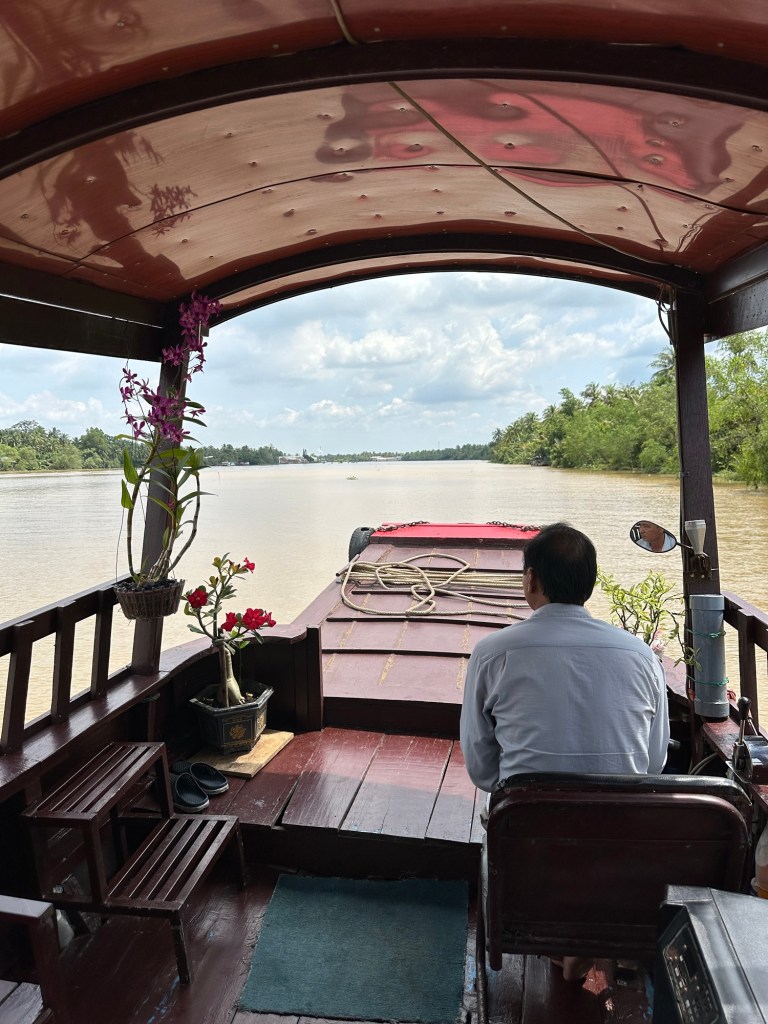
Shades of :
‘You feel mighty free and easy and comfortable on a raft.’
As Huckleberry Finn said to Tom Sawyer.
We stopped off at a number of points of interest. First, a ‘brick factory’. We were to learn that everything extracted or farmed – everything – is used in the Mekong Delta, something they are rightly proud of.
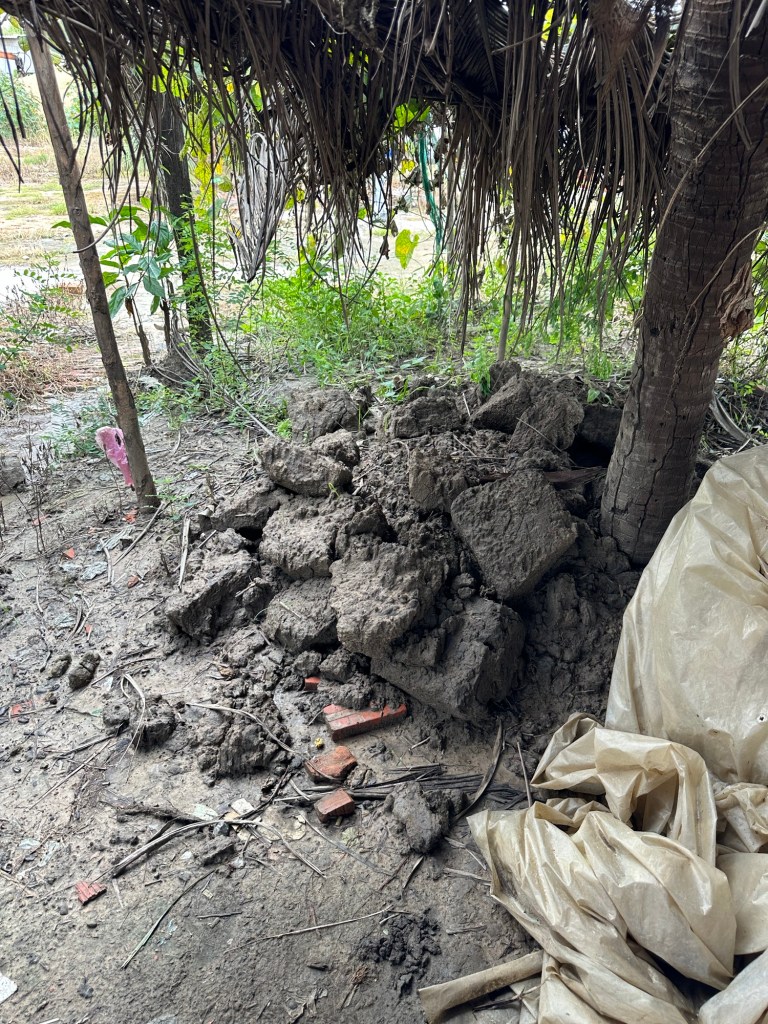
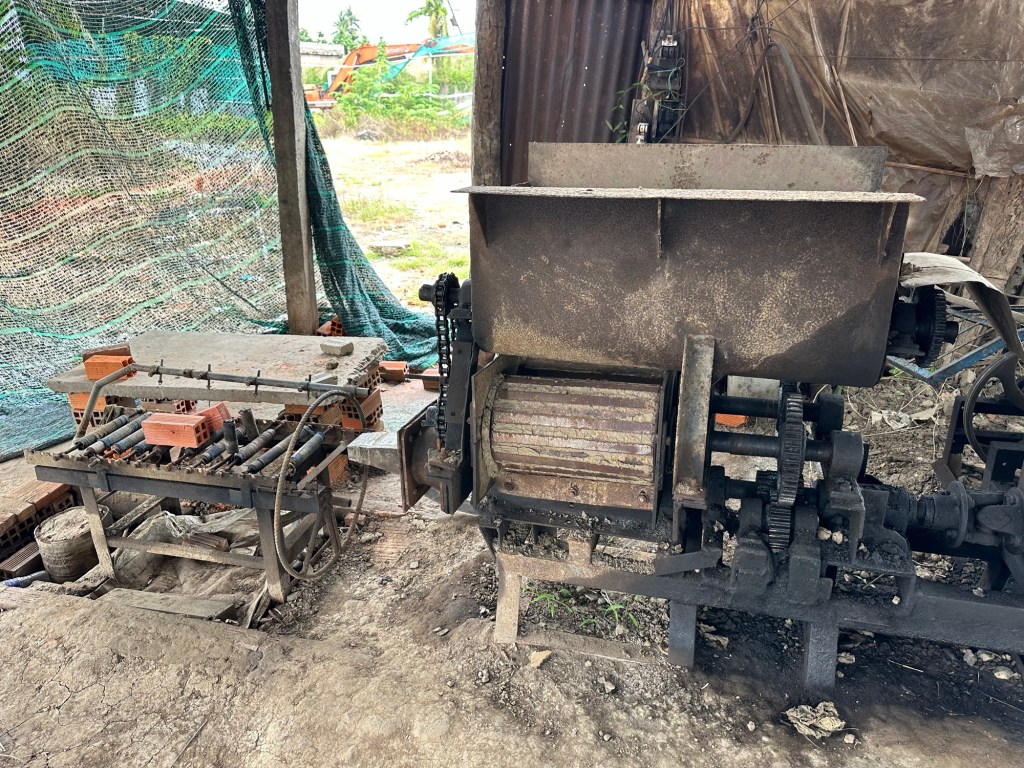
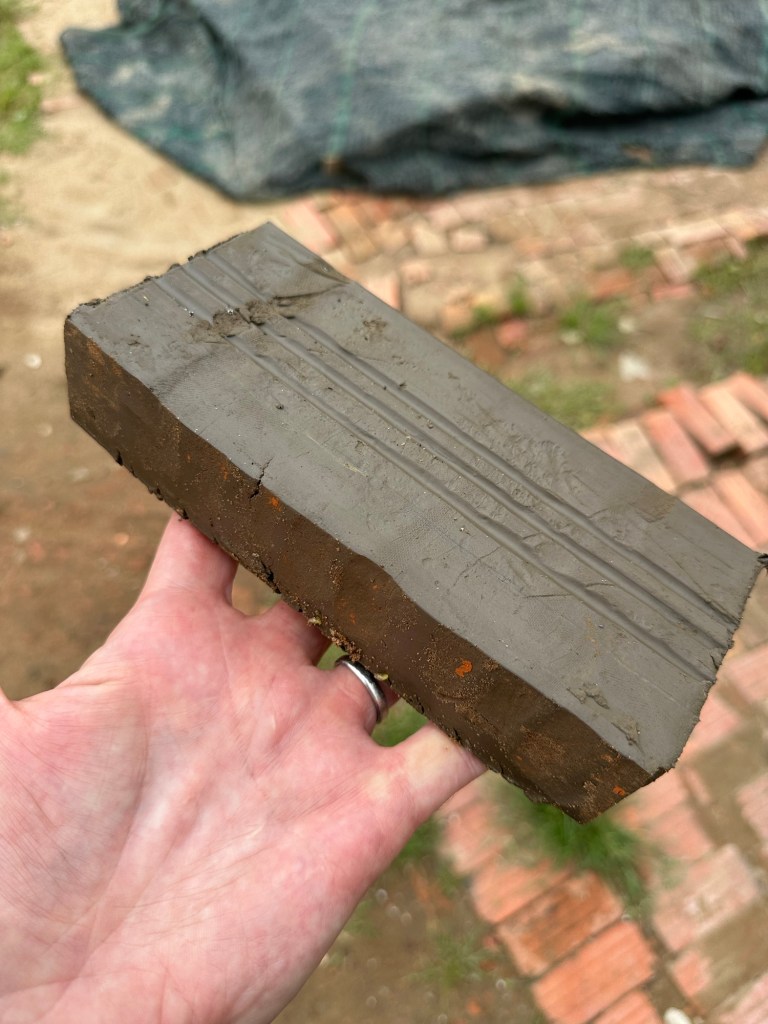
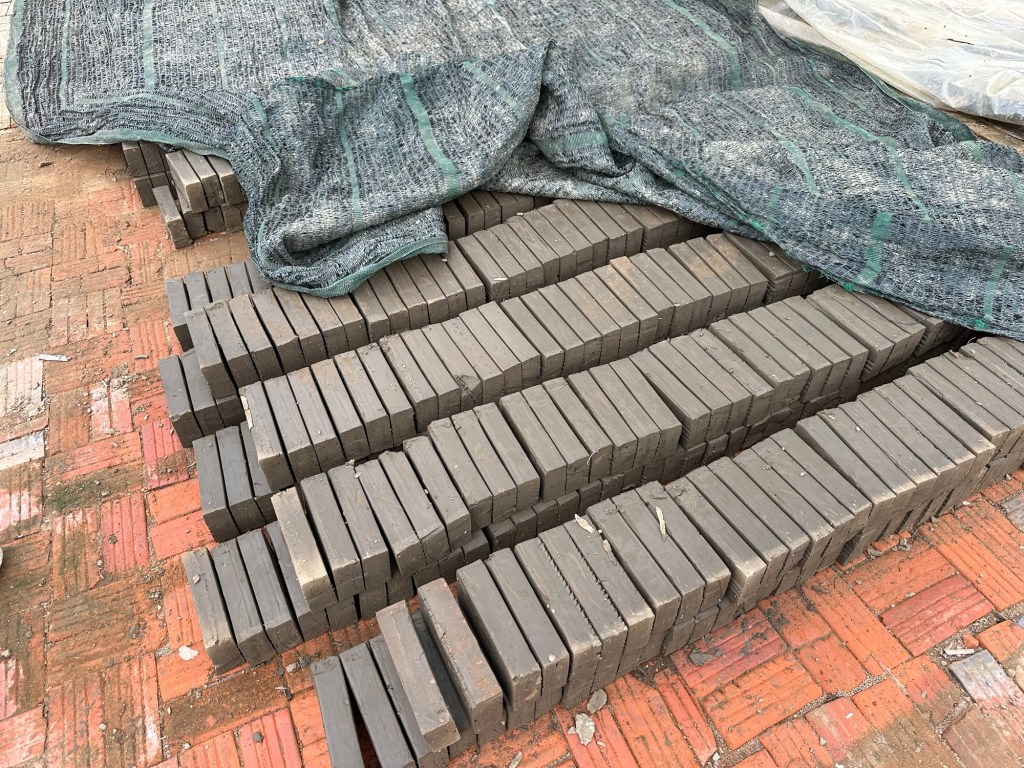
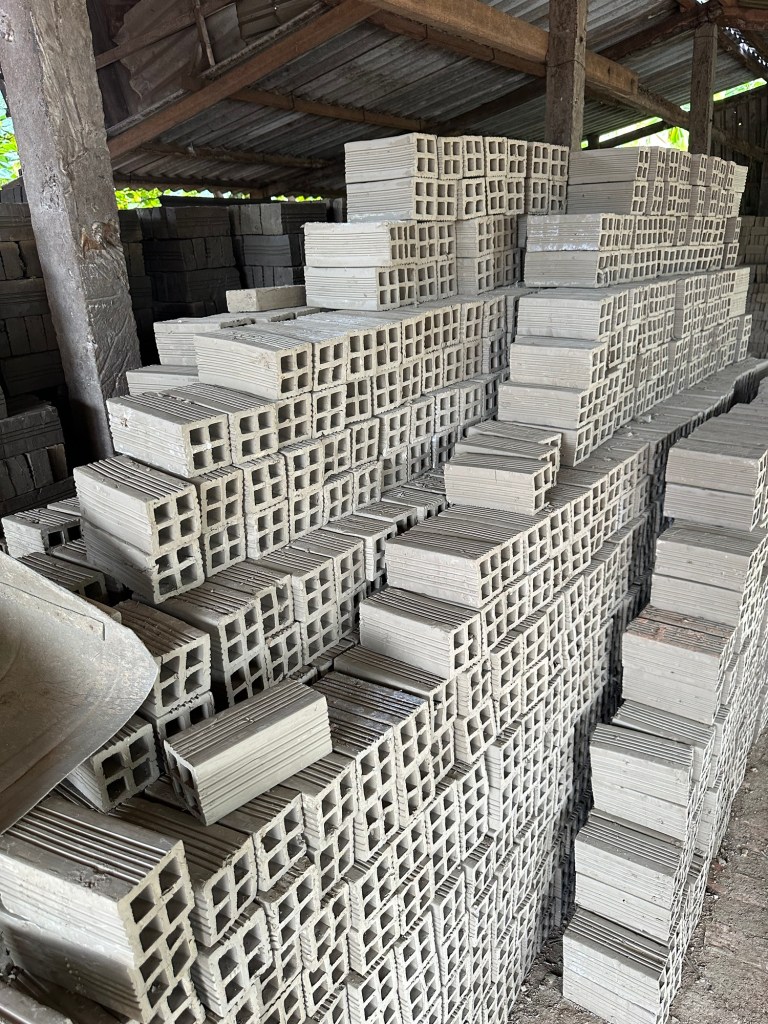
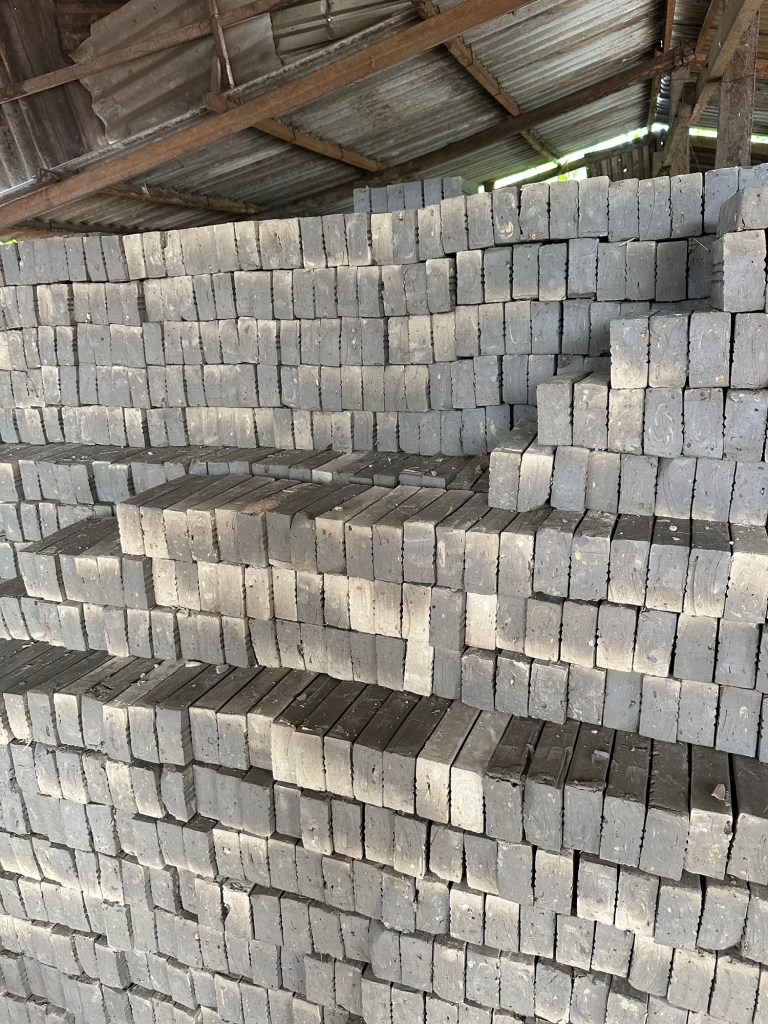
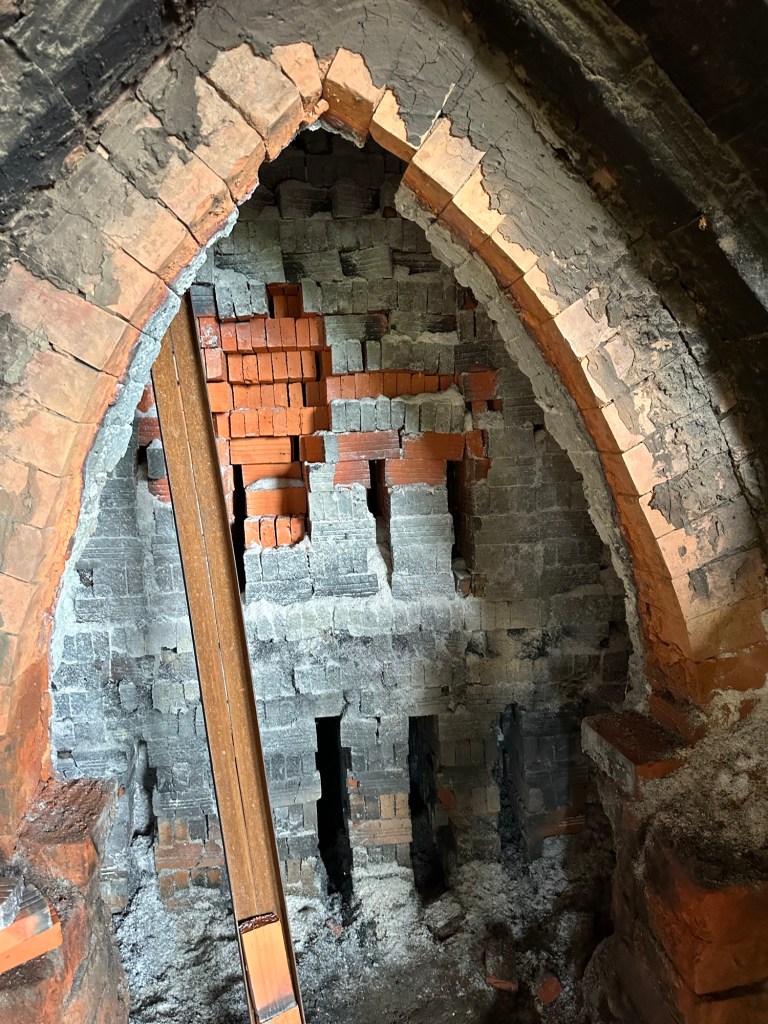
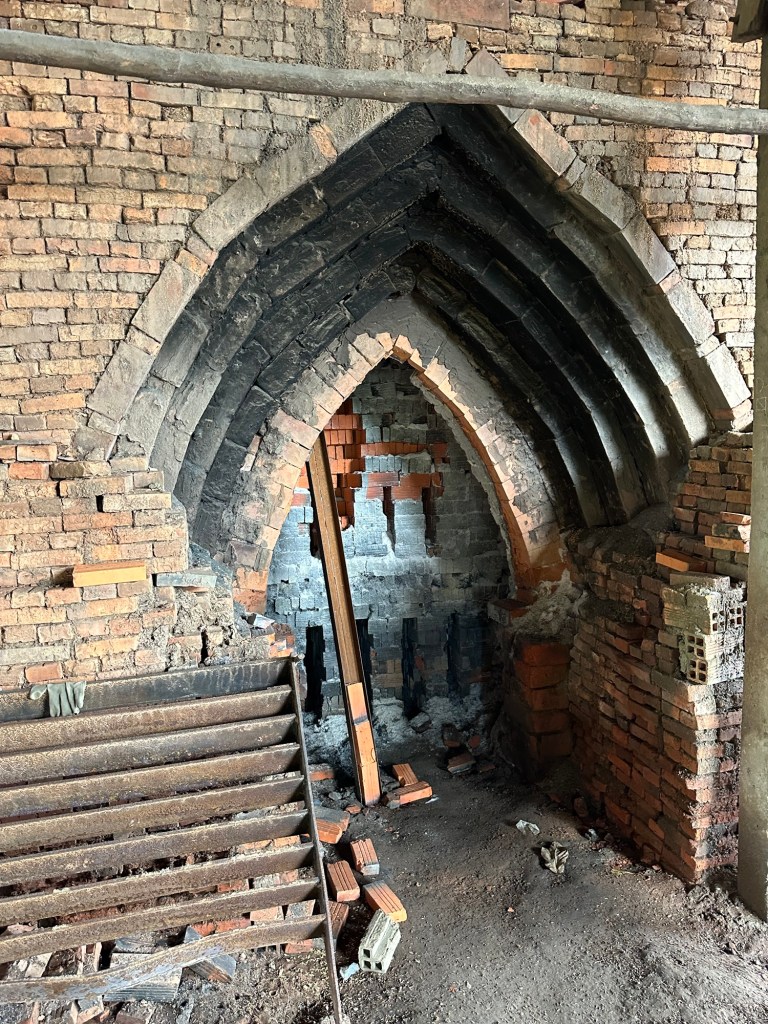
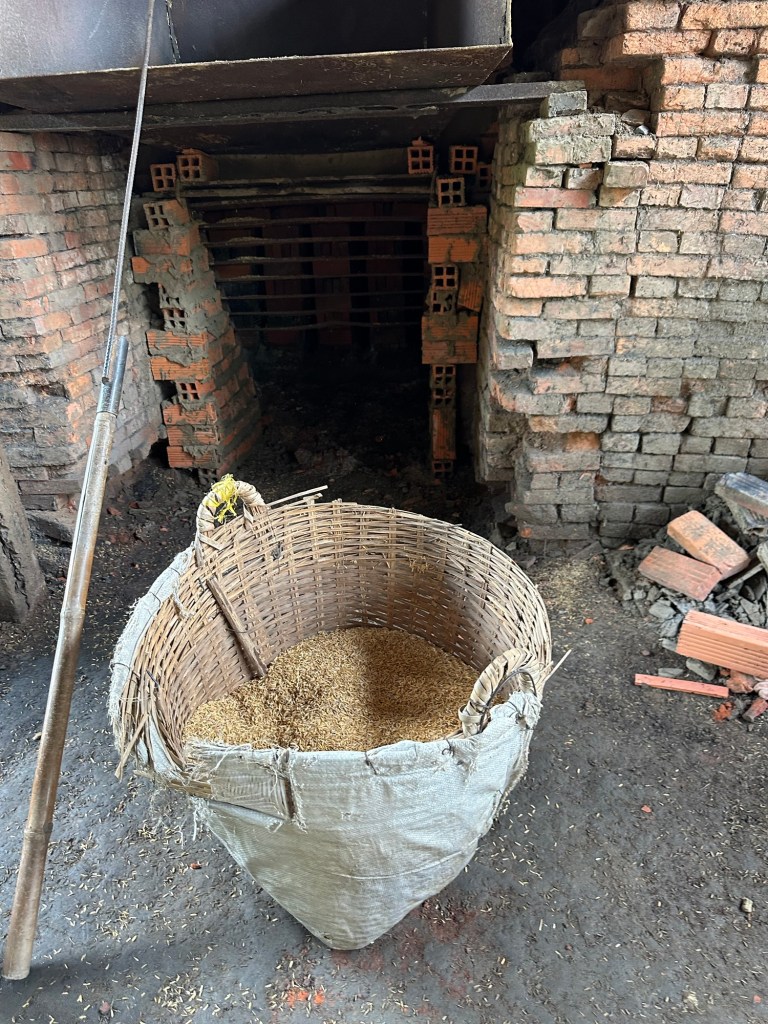
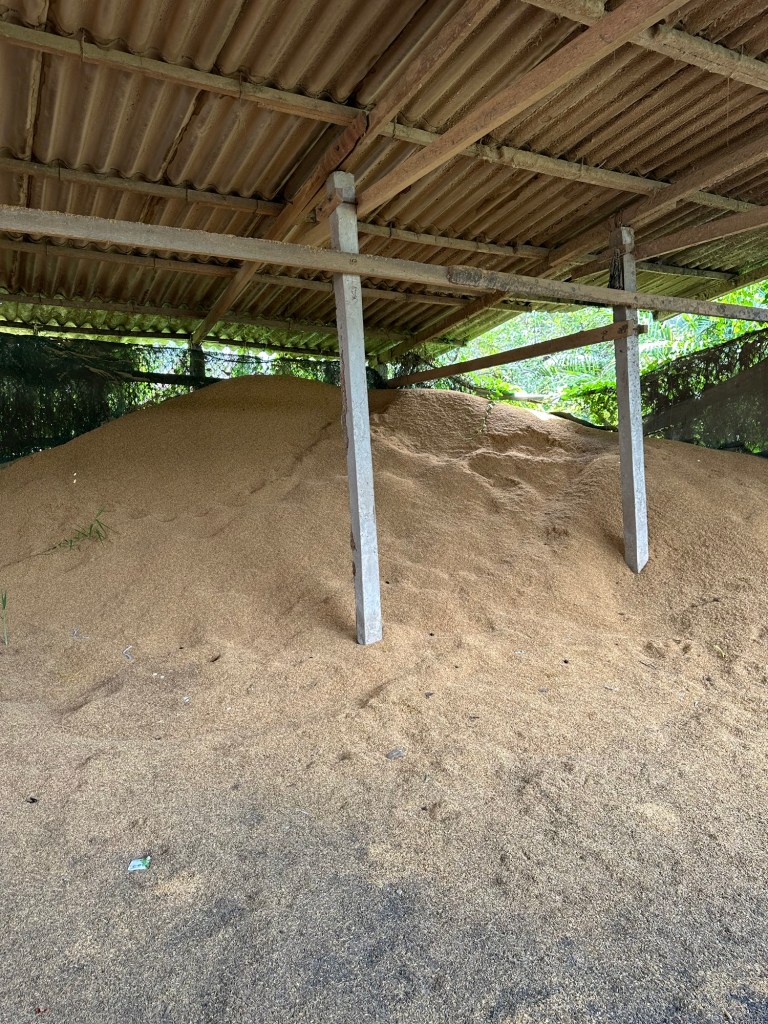
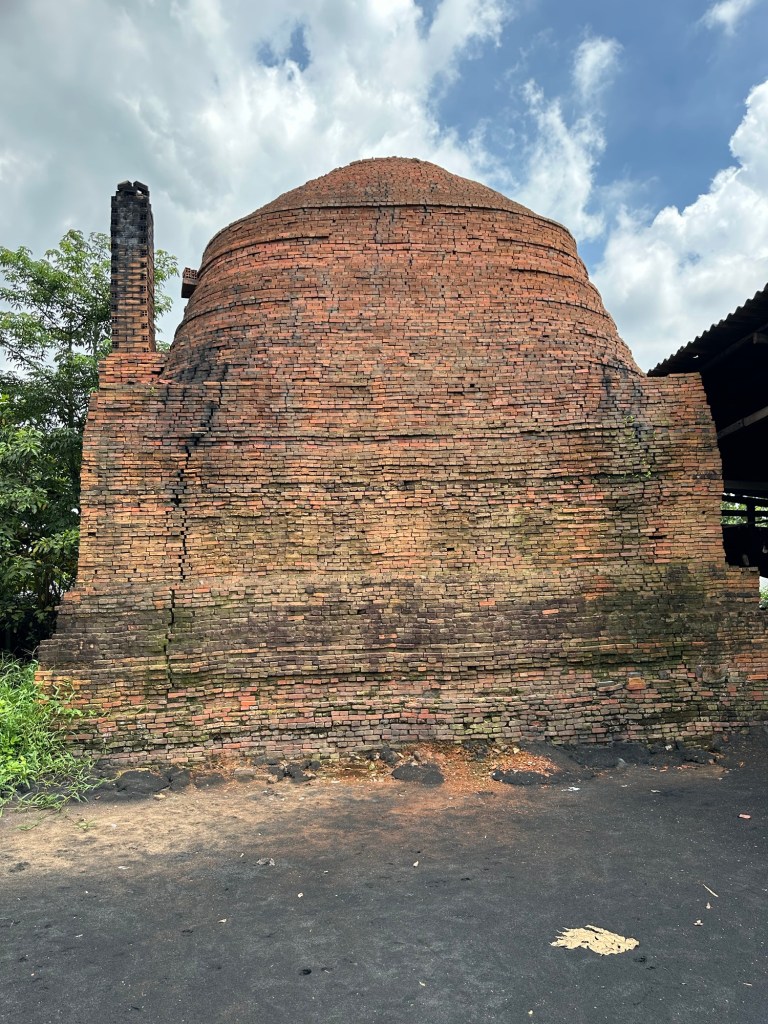
This site had two enormous kilns in which the bricks are fired for 20 days.
Heading downstream…
Next stop, a coconut farm…
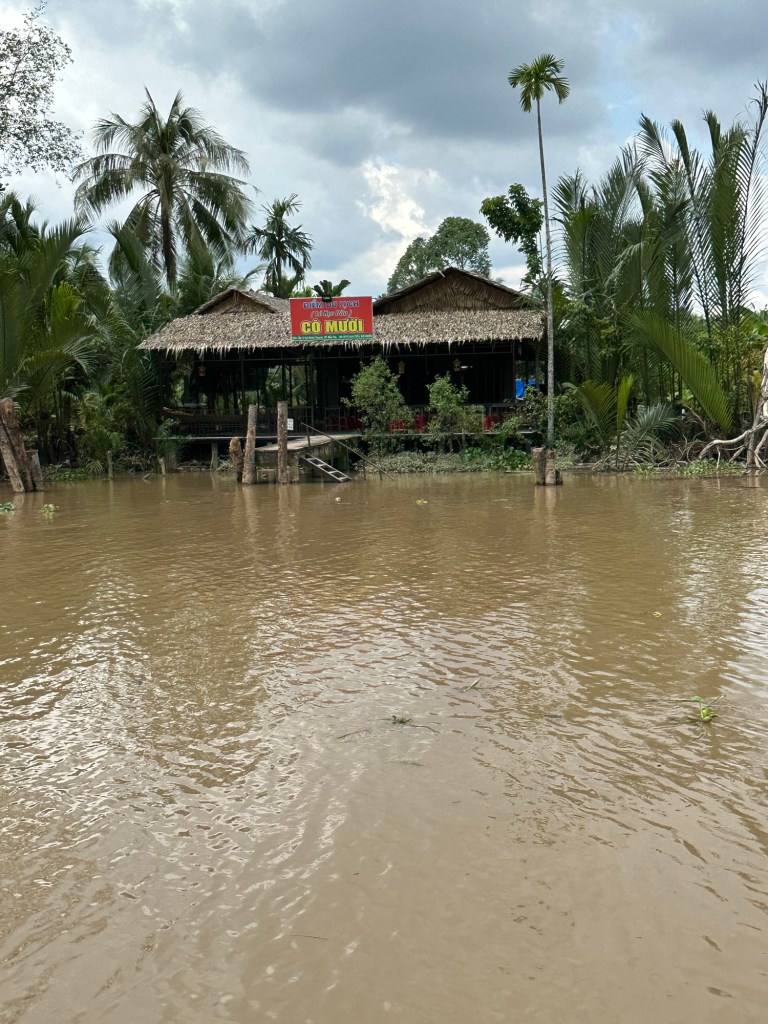
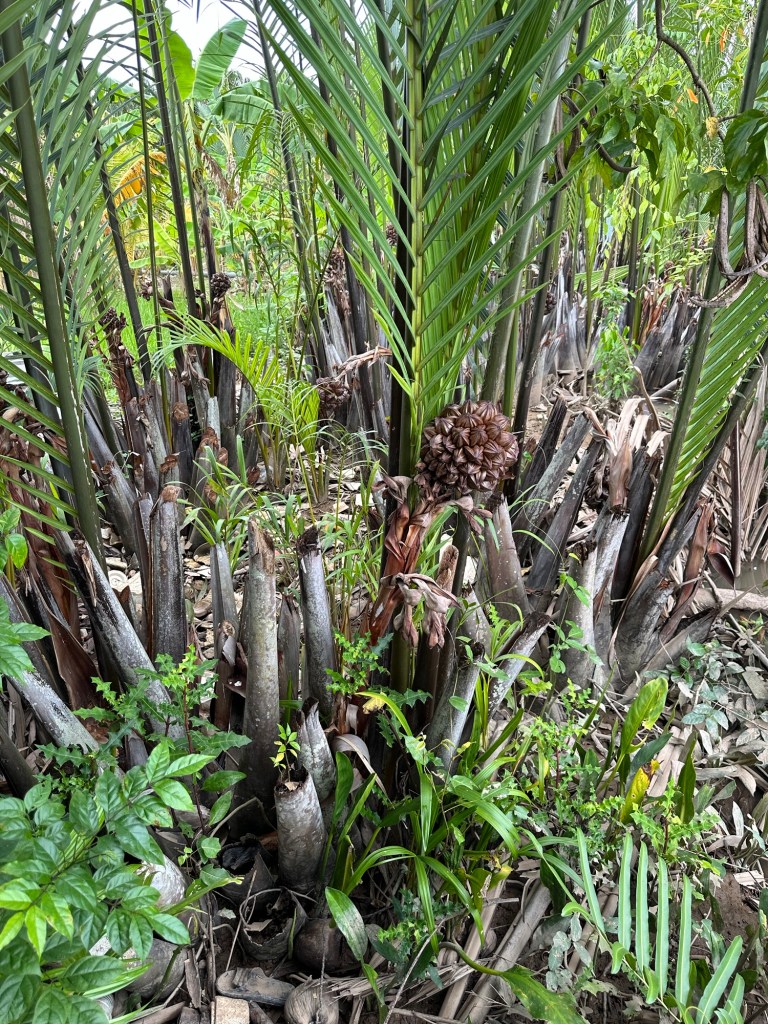
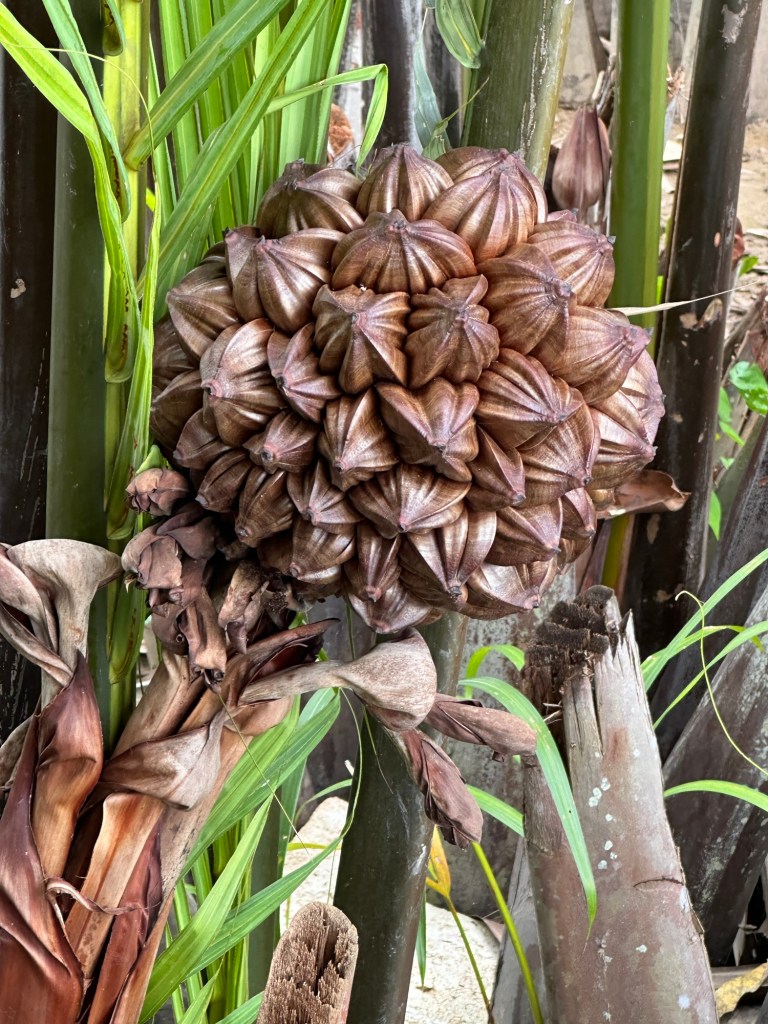
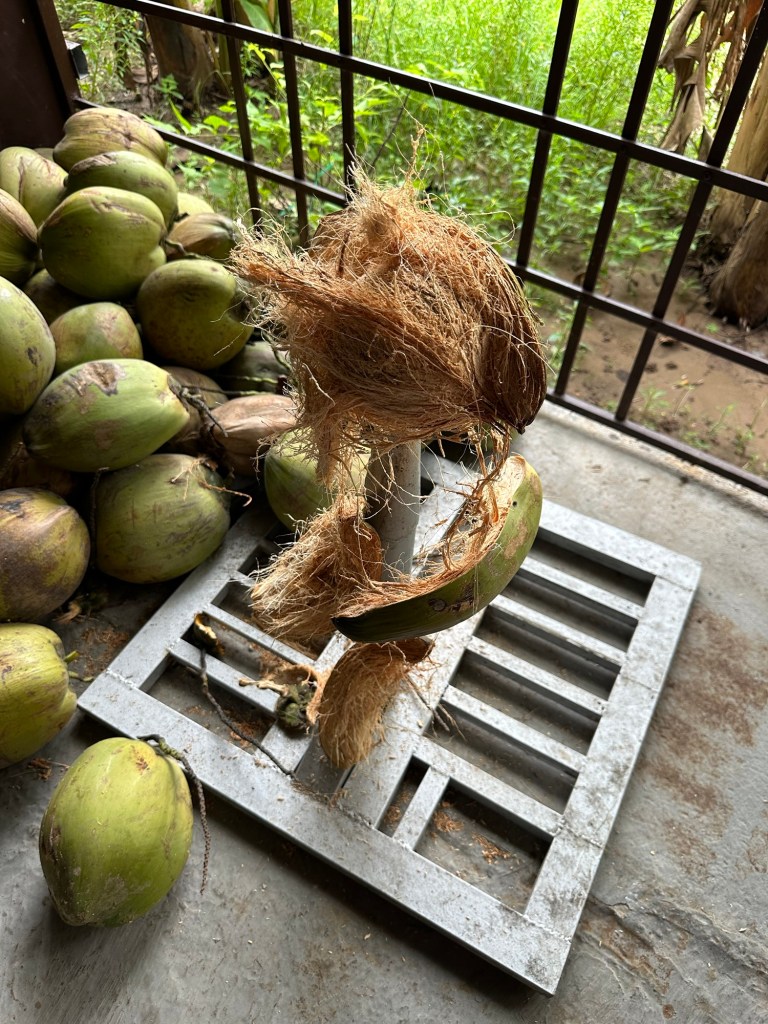
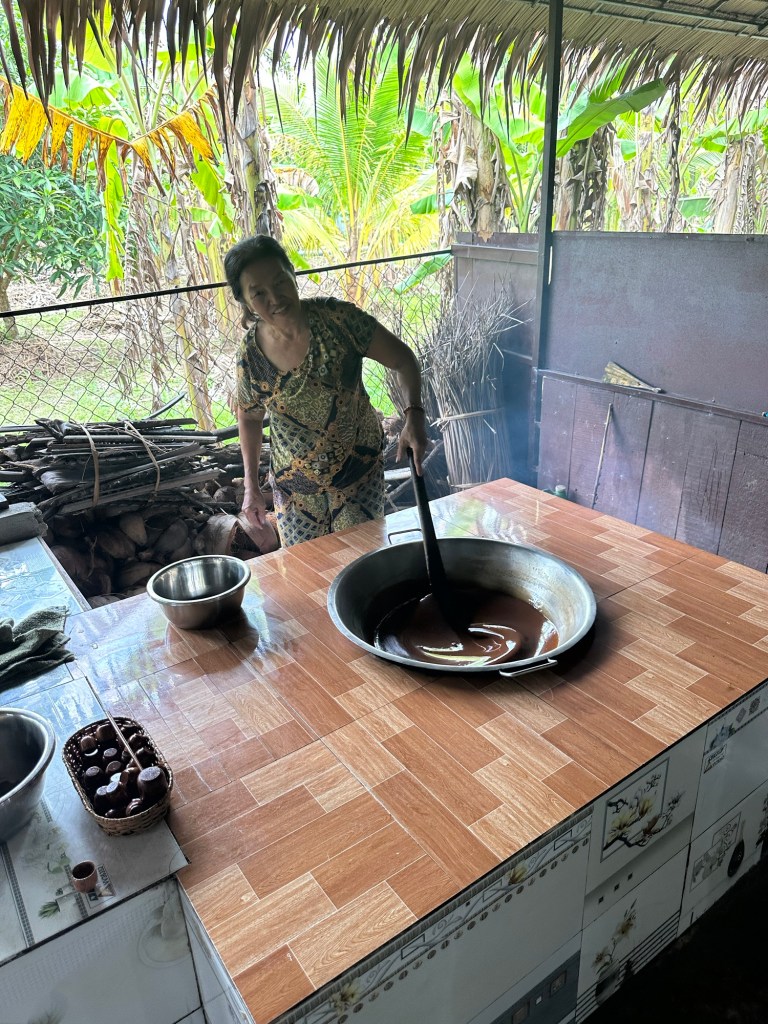
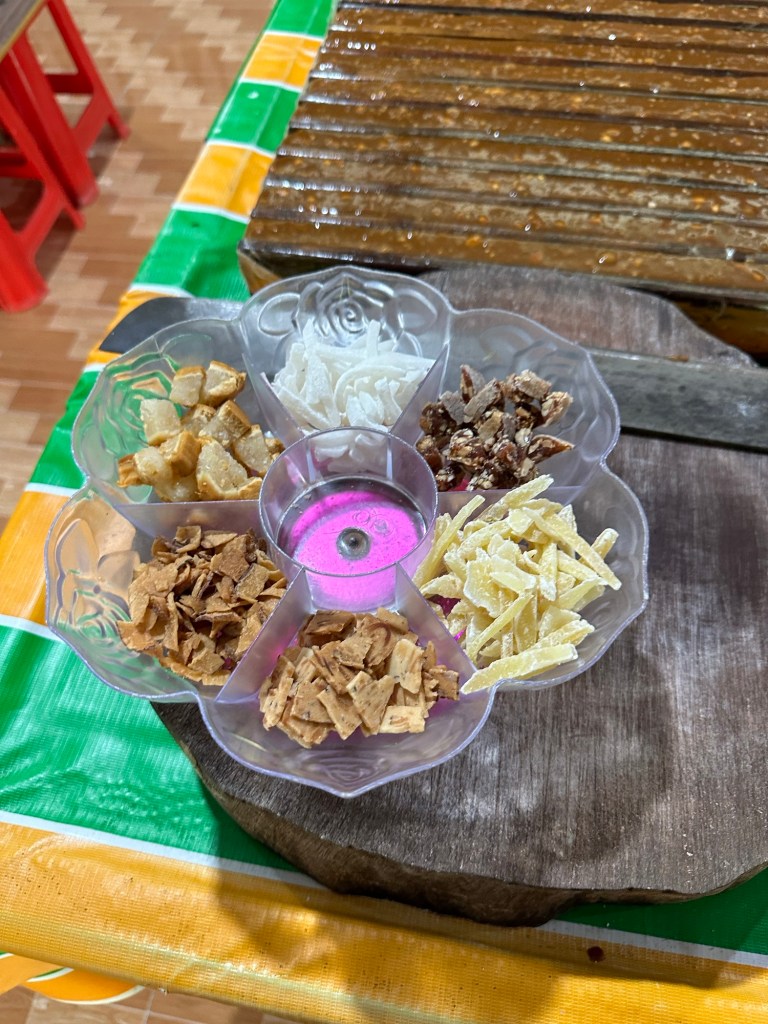
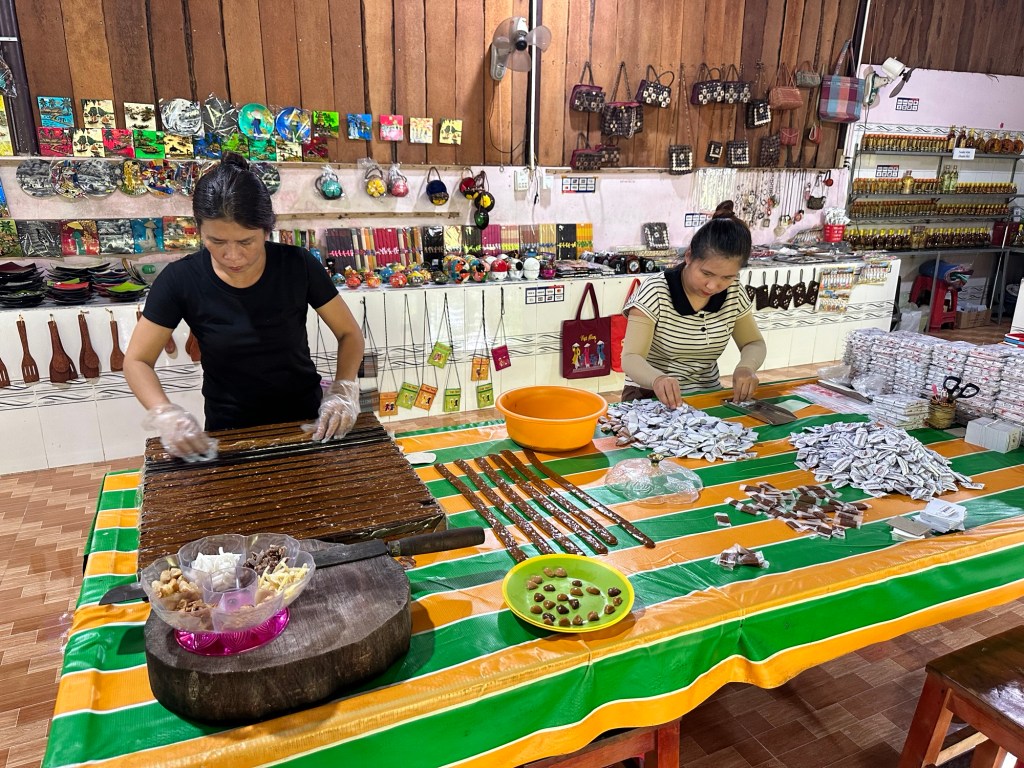
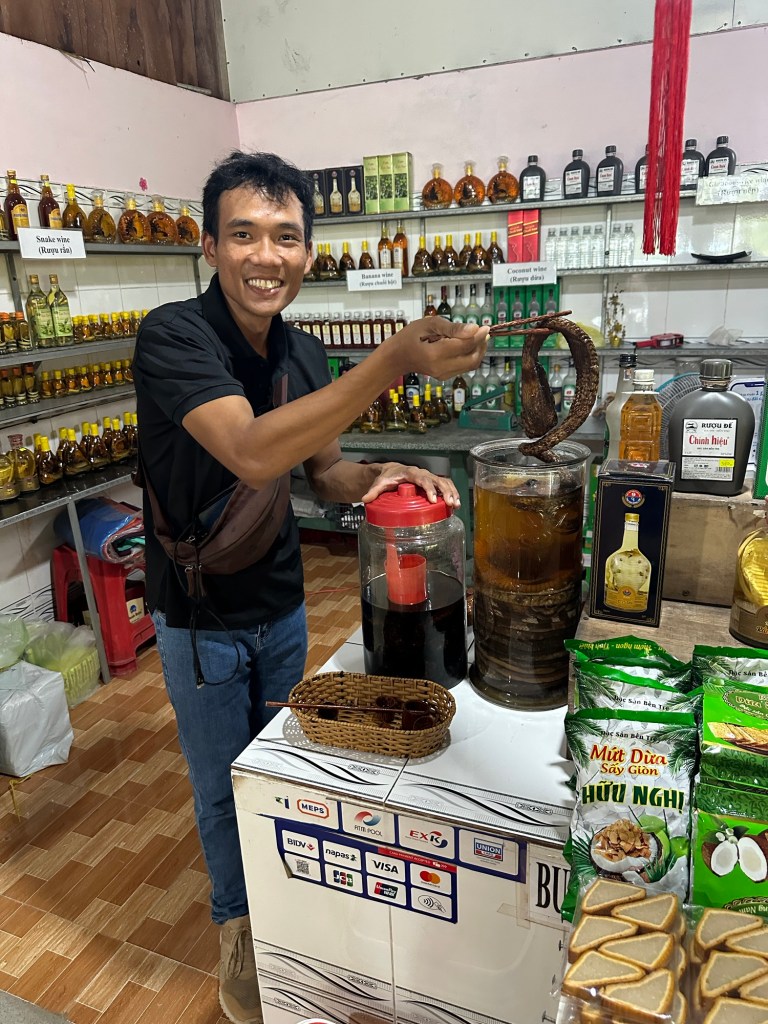
And, well! Matt took great delight in introducing us to snake wine, and banana wine.
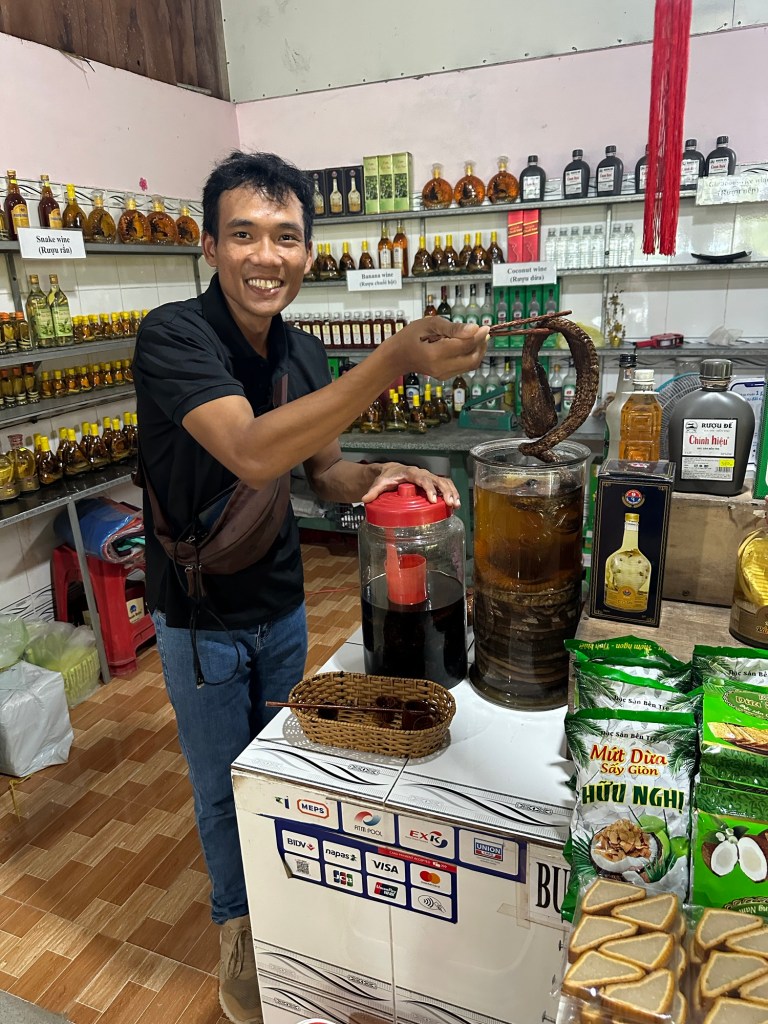
The snake wine is left to ferment for at least 6 months, and, I kid you not, it really was good stuff, and had quite a kick to it. Snake wine is believed to be good for an aching back. The countries of Indochina took a lot of learning from the Chinese in using natural remedies, believing there is a use to be had out of every animal, be it snake, scorpion, frog, whatever.
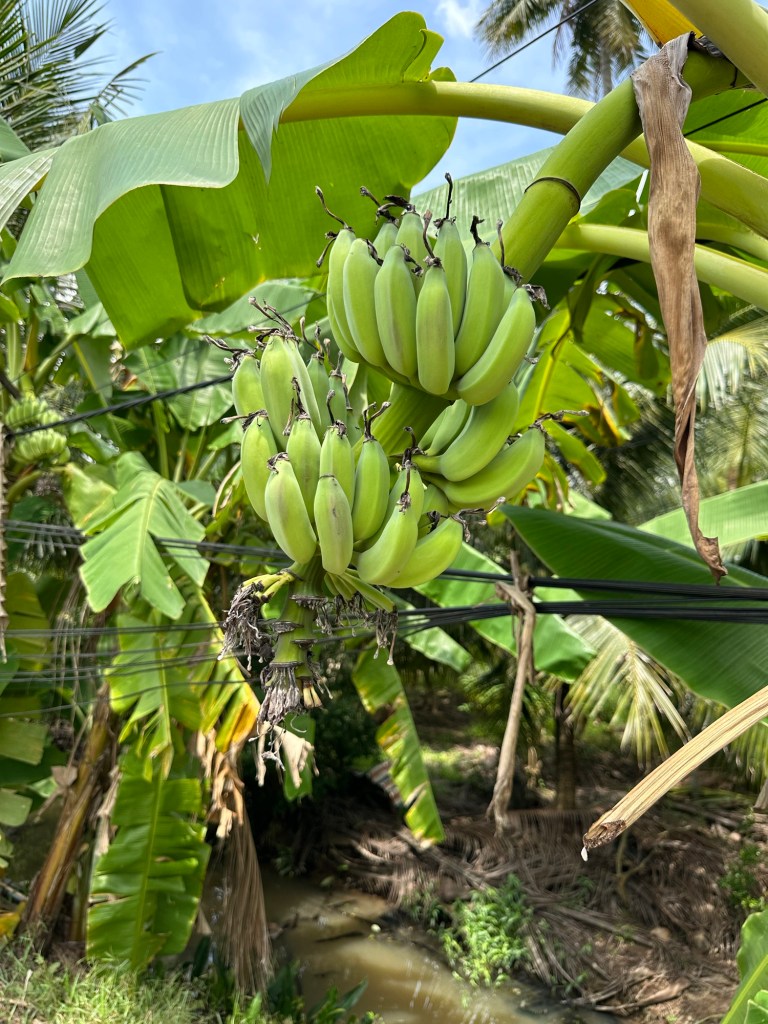
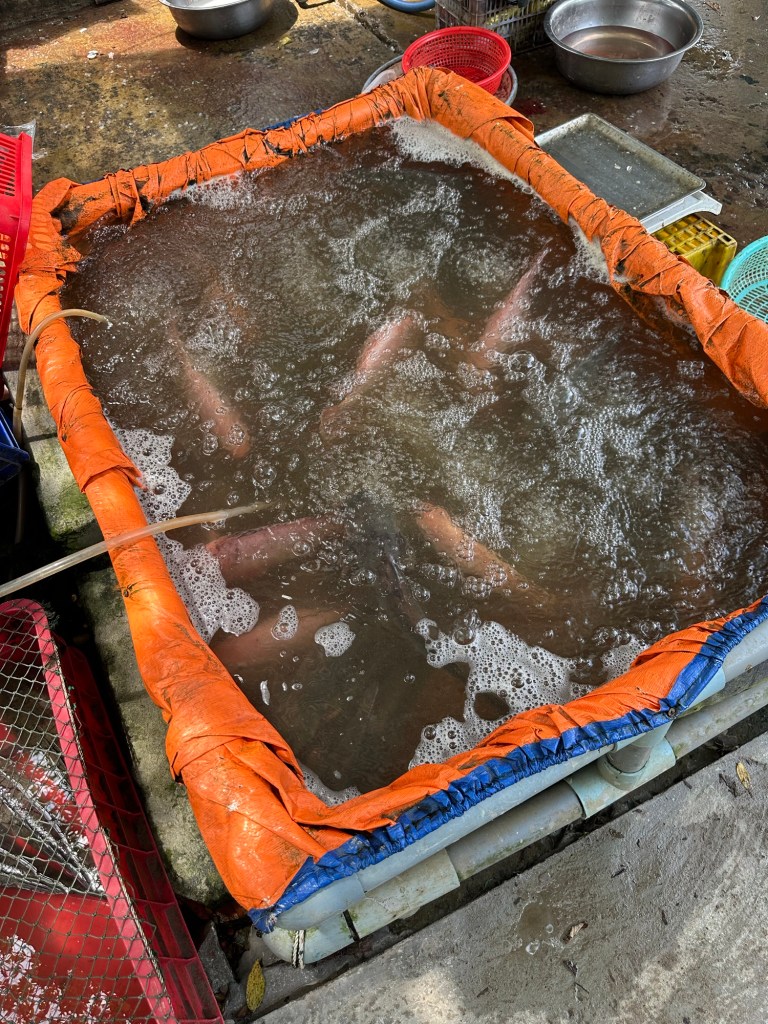
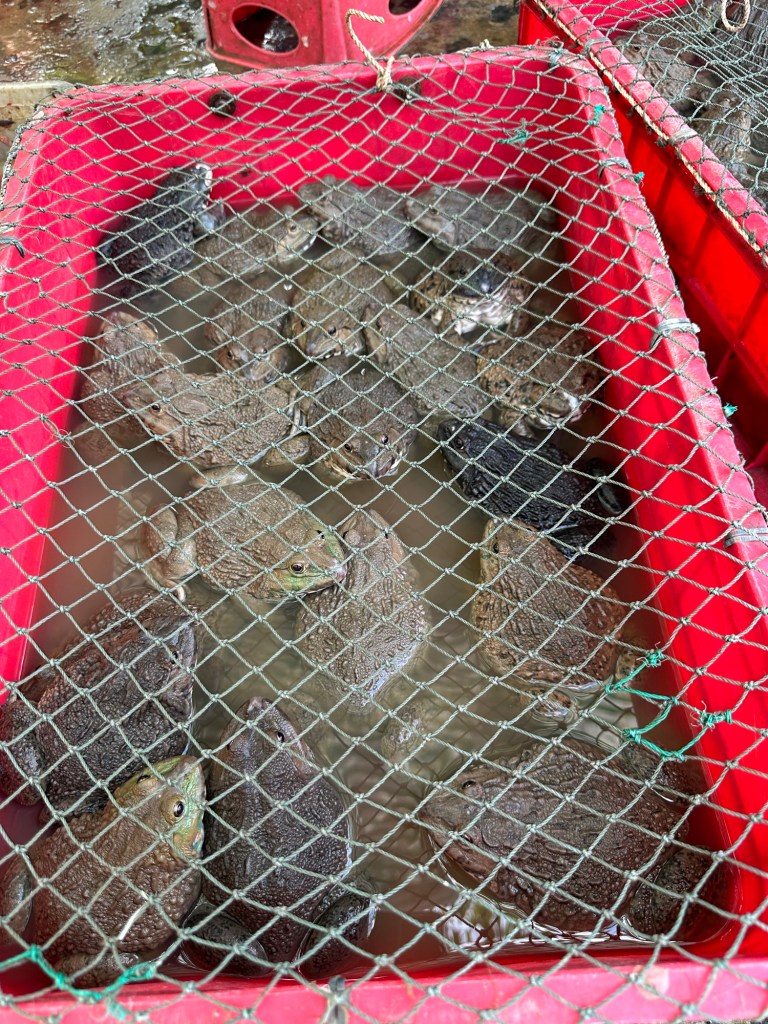
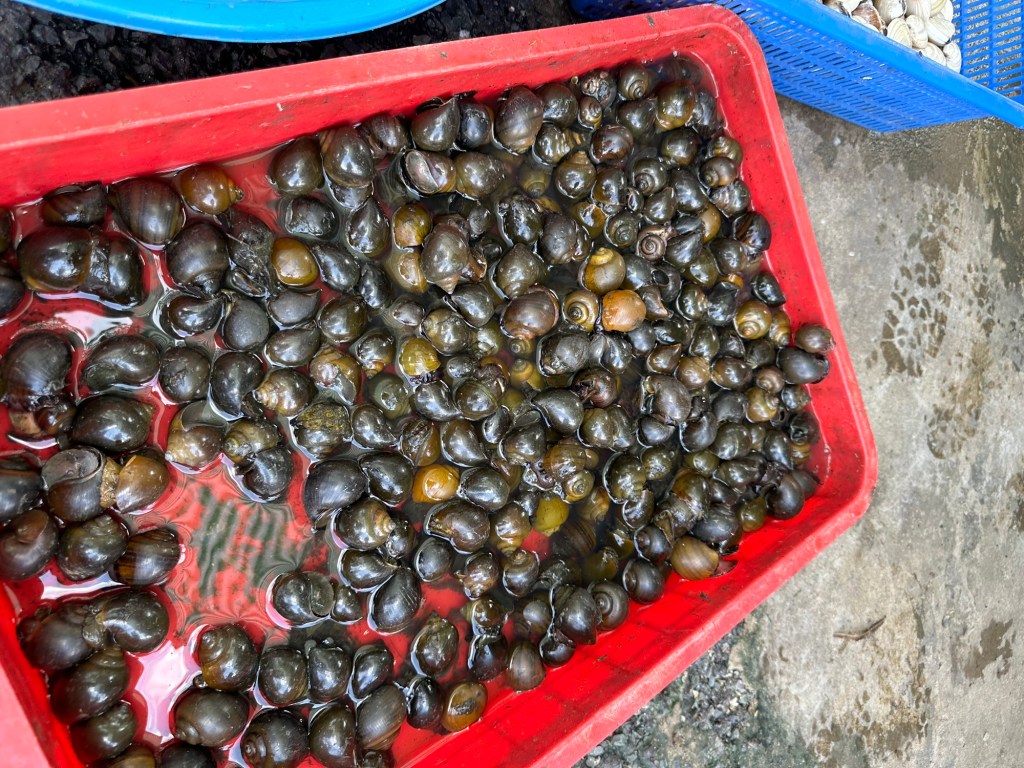
All locally sourced and eaten by locals or taken to local markets.
Next stop, a household that makes mats from reeds, to be sold at local markets.
We were allowed to view their home, it being a typical one of its type. We always asked the people themselves for permission to take photographs/ videos.
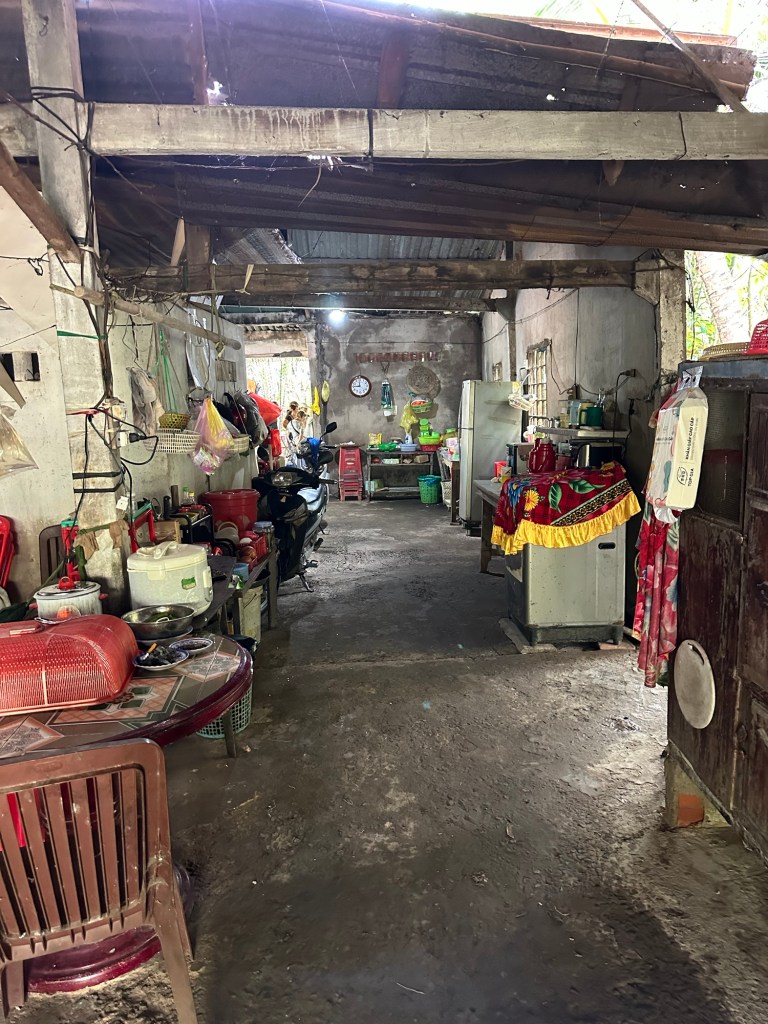
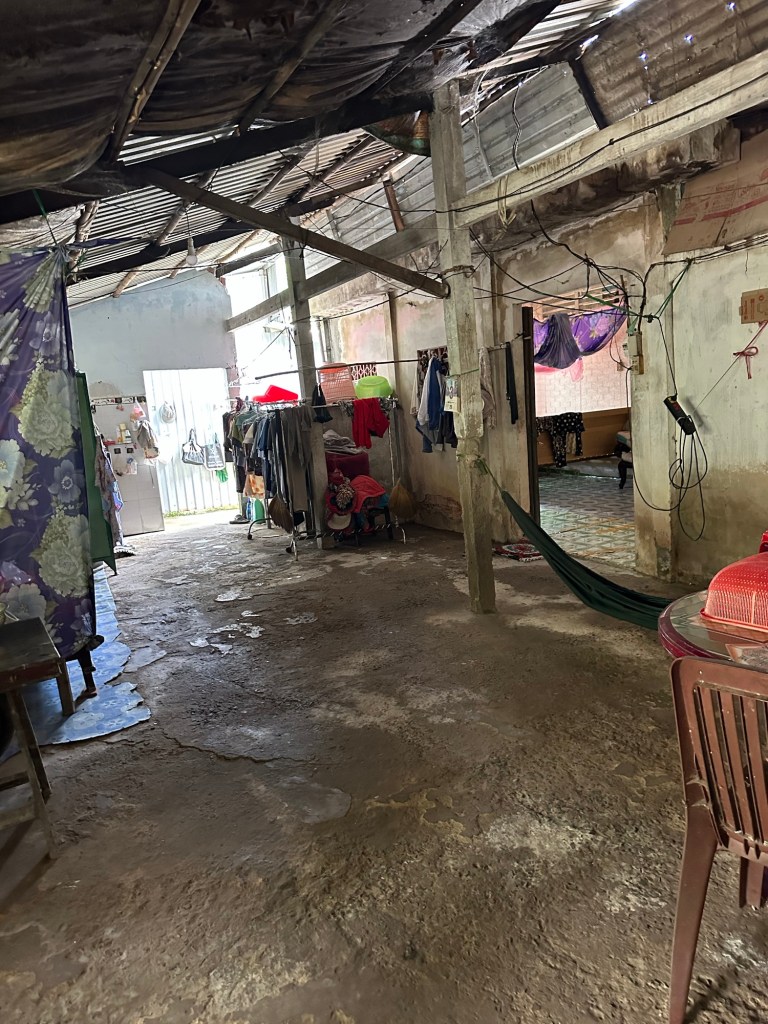
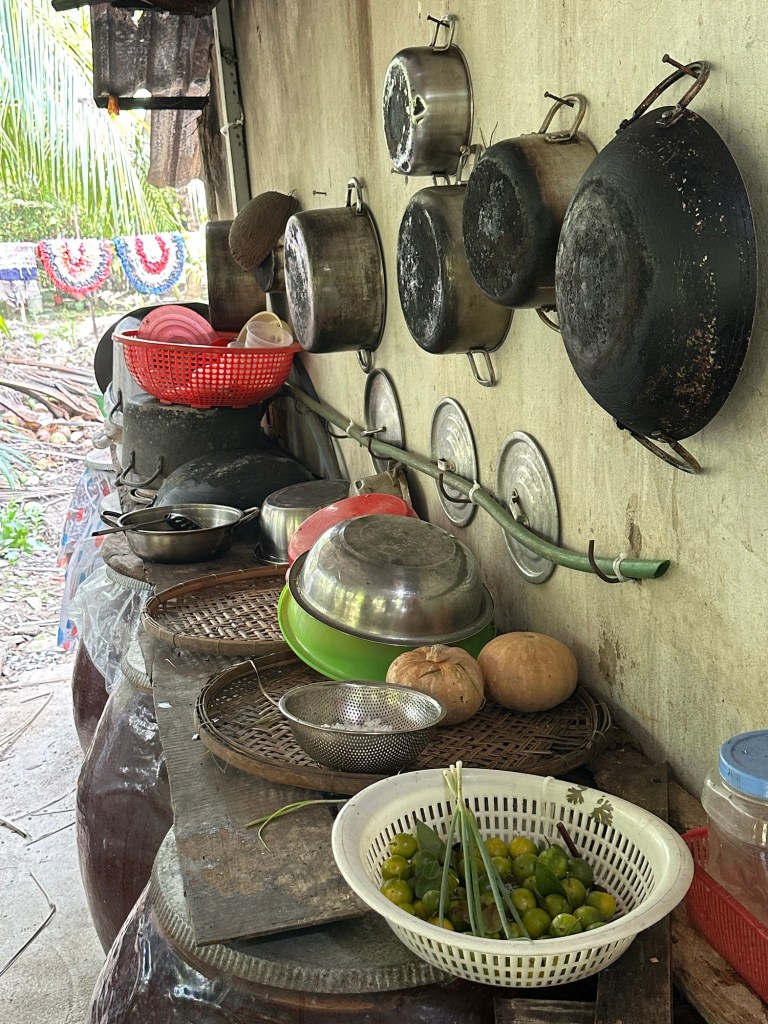
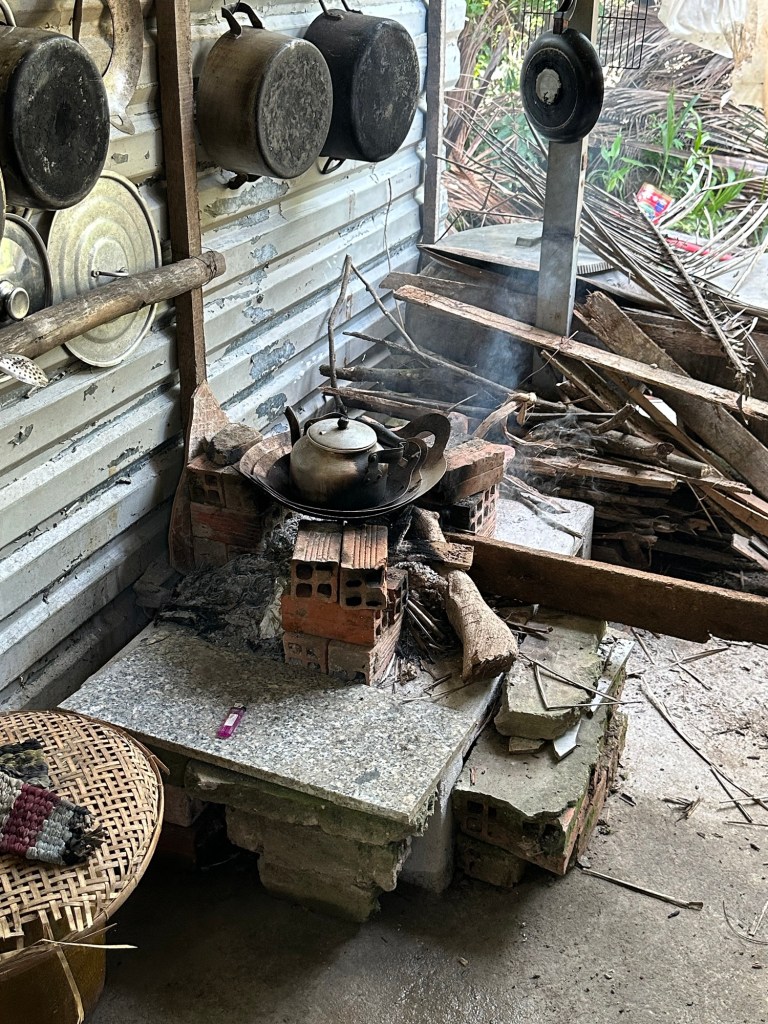
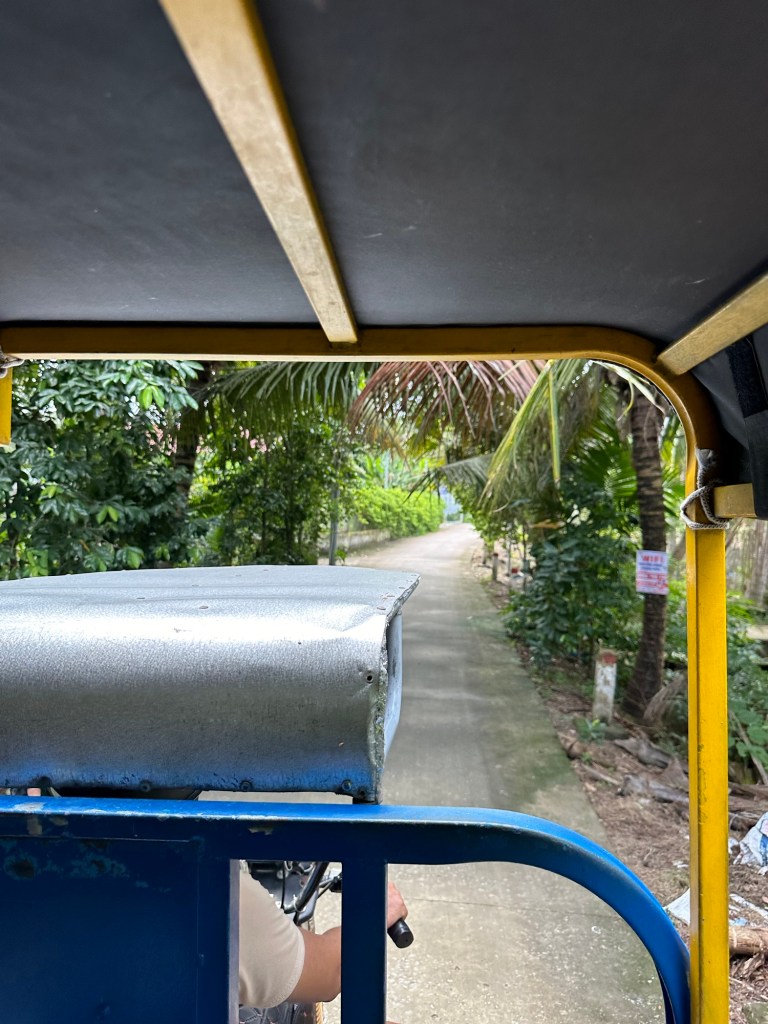
We then boarded a tuk-tuk for a journey through the village to a local restaurant.
We had a really tasty lunch. The absolute highlight was freshly caught elephant fish. It was the best fish I have ever (not getting carried away here) tasted, period.
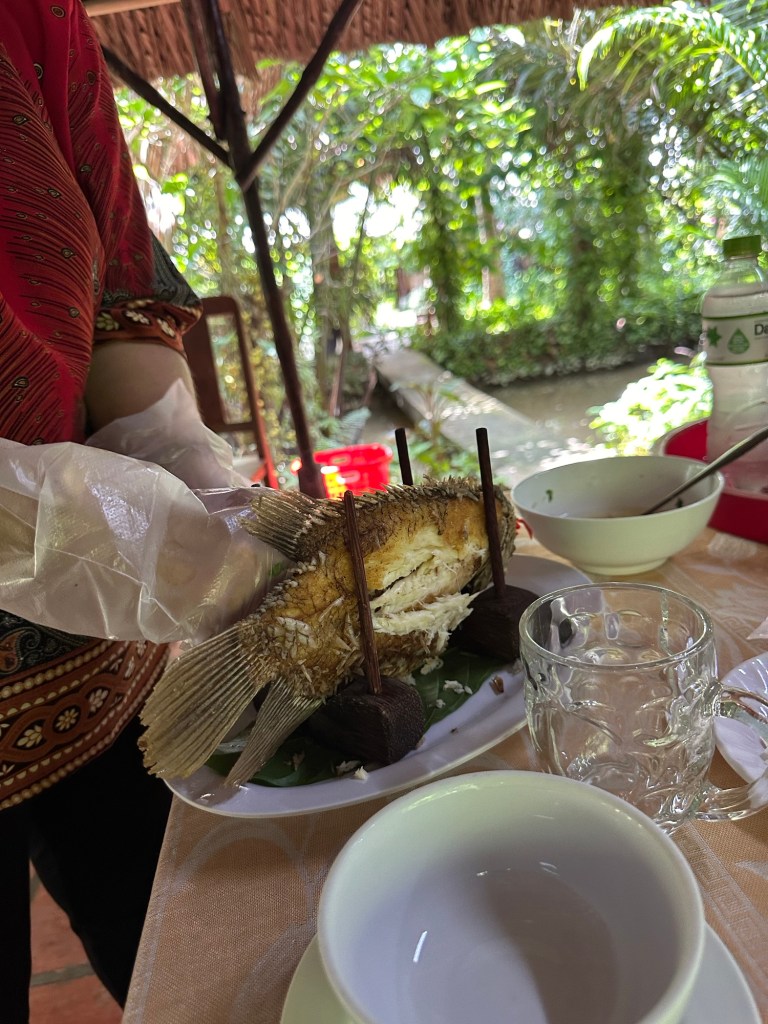
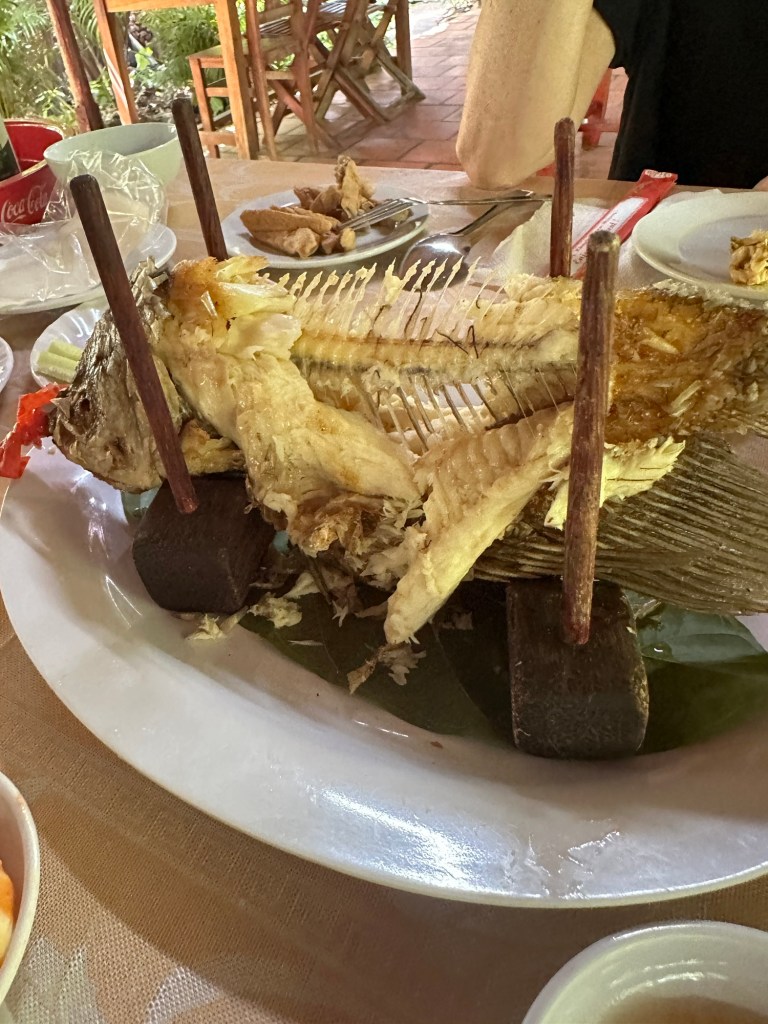
It quite literally fell off the bone.
Lunch was followed by a journey through a narrower part of the area by rowing boat.
Yes, you pay for the trip. Yes, it’s a well trod tourist path. But we headed back to Sài Gòn feeling extremely privileged – lucky – to have been let into the homes of these delightful, proud people, and to have witnessed a way of life that offers up so many lessons for us wasteful ‘Westeners’.
All in all, one thoroughly enjoyable learning experience in the company of our friendly, gracious, extremely knowledgeable and articulate guide, Matt. Who, he proudly says, is Cambodian – wanting to live by the Mekong Delta as it did, indeed, once belong to Cambodia. So that means Matt is fluent in Cambodian, Vietnamese and English. Quite something!
Back in Sài Gòn, we both fancied a coffee and knew just where we were heading, Trung Nguyên Legend Cafe. We had clocked this place when we first arrived. It looked a bit posh, a bit Bettysesque, indeed. Anyone from the East Riding of Yorkshire will get what I mean. For the rest click here.
Trung Nguyên Legend, ‘The energy coffee that changes life’, sure does big itself up.
“Ready to leave no stones unturned to create the world’s best masterpieces of coffee for creativity and success”
Trung Nguyên Legend recognise that the Japanese have the art of the tea ceremony all wrapped up, ‘a living art conveyed through enjoyment of a cup of tea’. And so, with the desire to ‘bring Vietnam’s coffee industry to a new height, raise the value of coffee not only as a regular drink but also at the level of cultural coffee, artistric coffee, spiritual coffee … to philosophical coffee, worthy of the position of the coffee power of the world.
“The Japanese did it!
The Vietnamese also can do it and do it better!”
The proof of the pudding is in the eating, as they say (whoever they are!).
Our order:
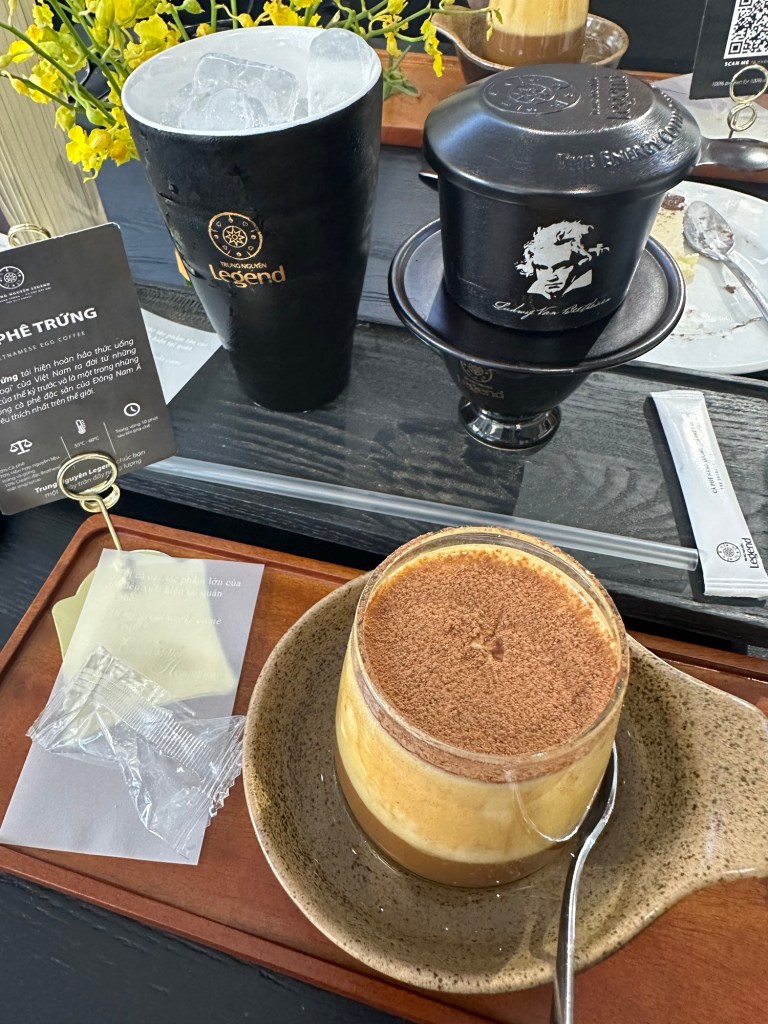
2 x Cà Phê Trứng
1 x Cà Phê Legend Đá
1 x Bánh Chocolate Mousse
Not as expensive as we thought it might be: 476,000 Vietnamese đồng (VND). Don’t be alarmed by the 0’s, this equates to £14.68, or $19.19 at today’s exchange rate.
It really is extraordinarily good coffee. Worth every single đồng! With a setting to match.
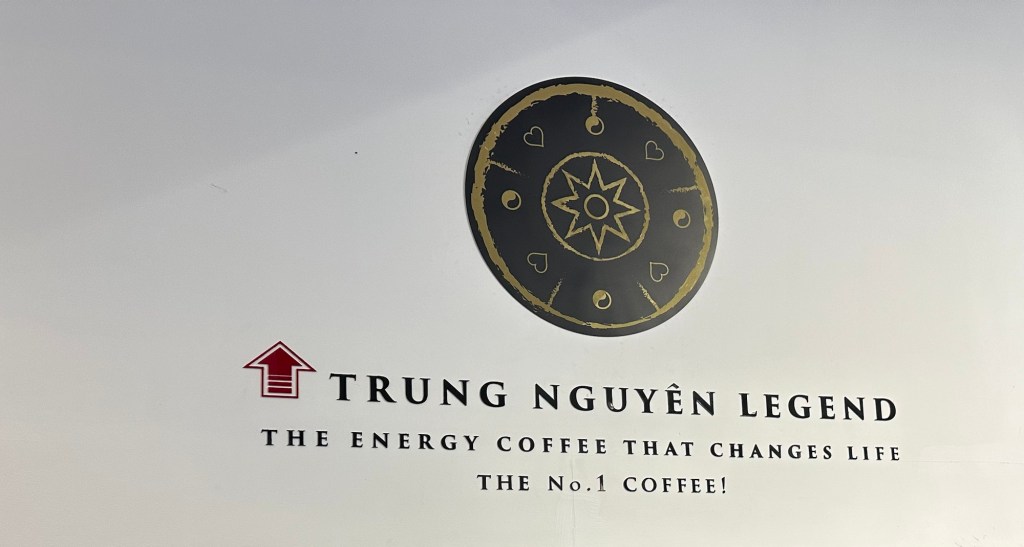
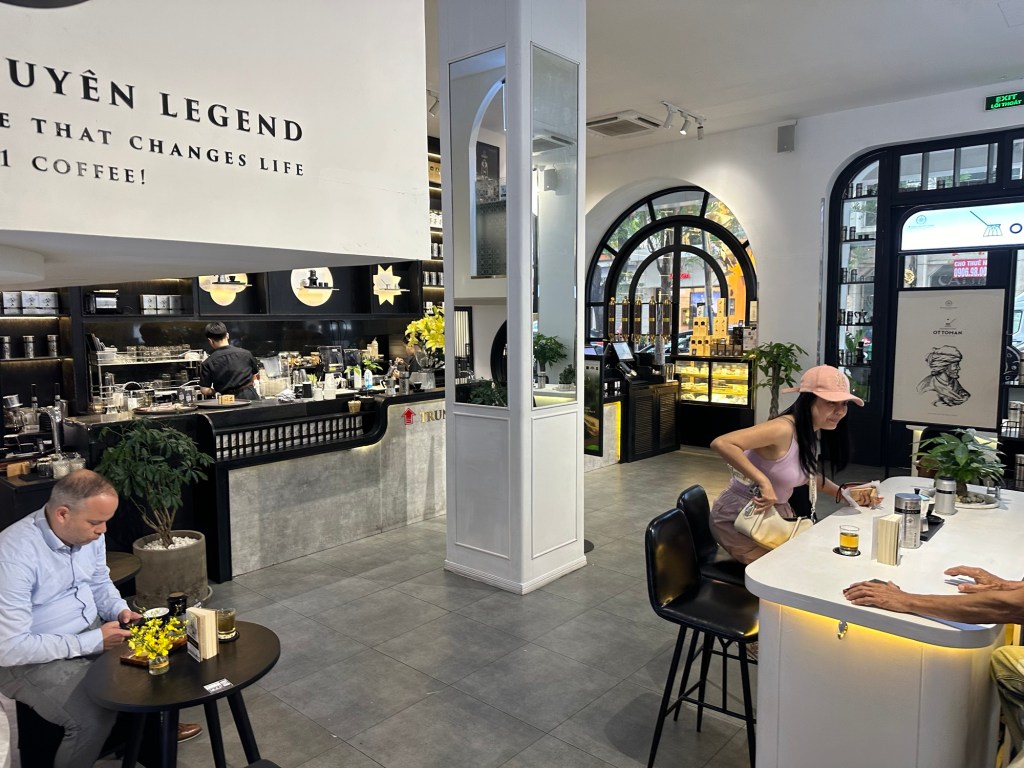
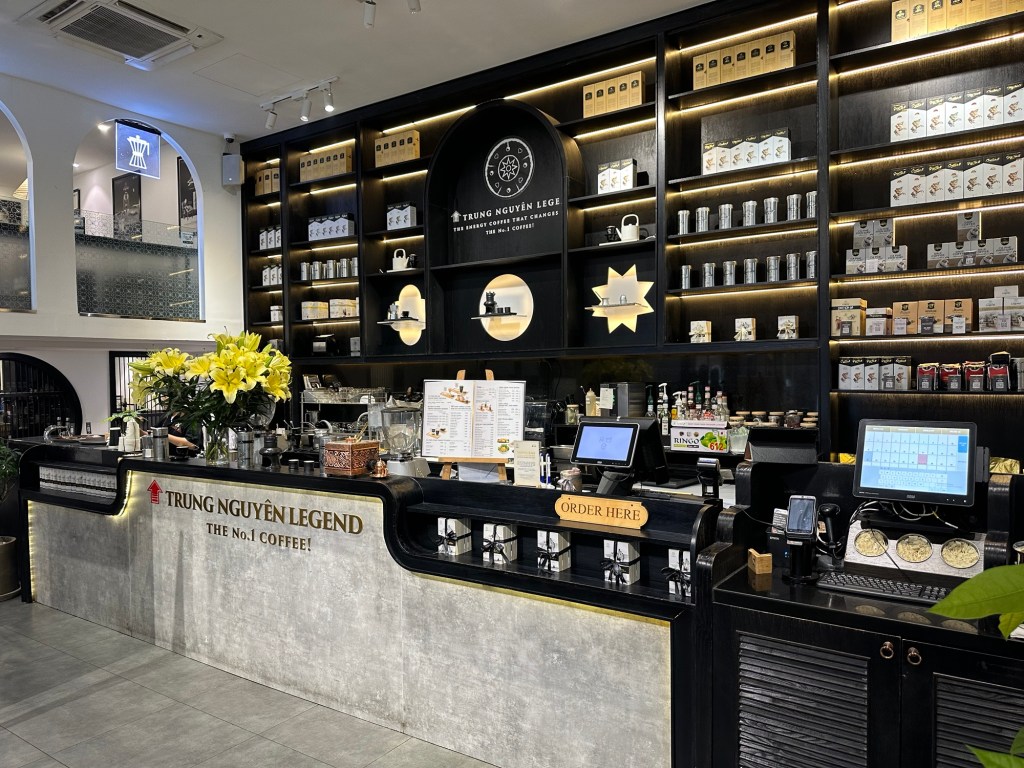
You can even retire to the ‘Coffee Zen Space’.
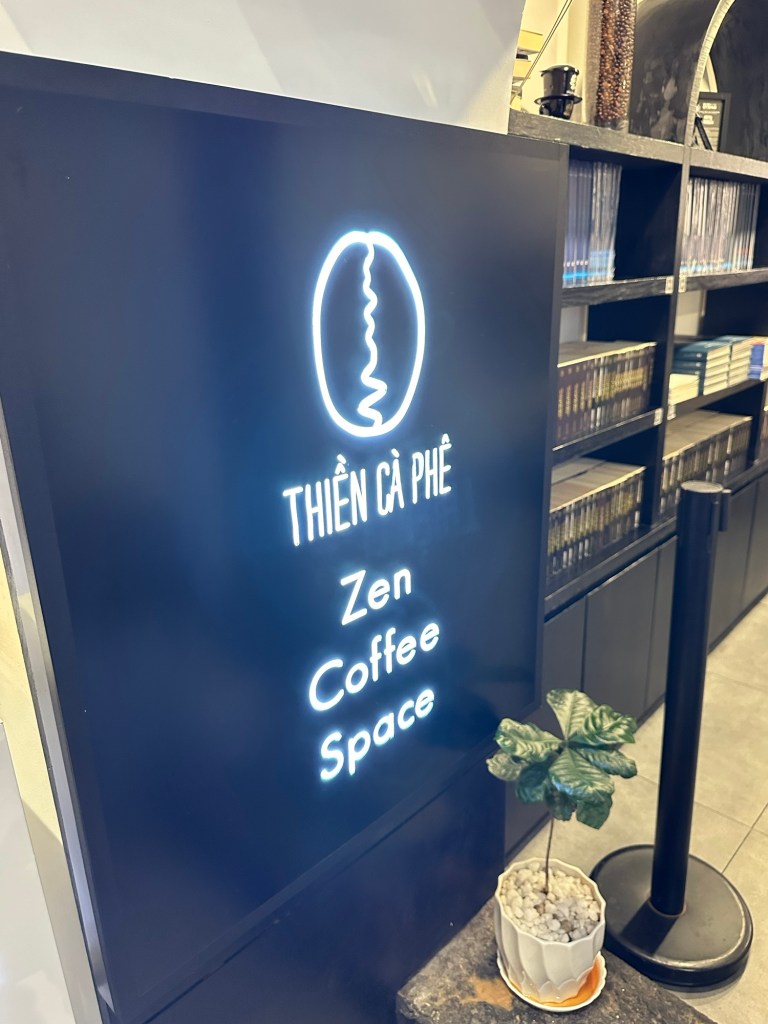
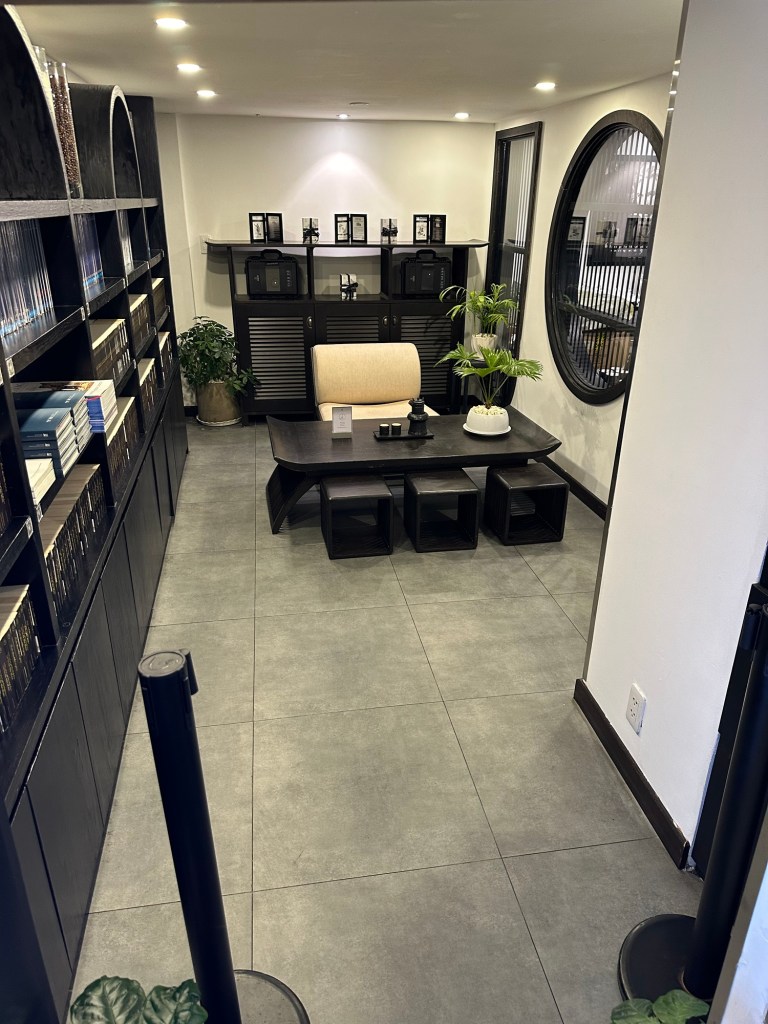
It’s certainly not the only way to enjoy coffee in Vietnam, there is a lot to be said for something more rustic, setting wise.
What you cannot argue with is the exquisite quality of the coffee. Believe me, I am very fussy where I buy my coffee from. I choose to pay a bit extra for my coffee, on-line from Algerian Coffee Stores, London. Check it out, it’s good stuff. Quality matters!
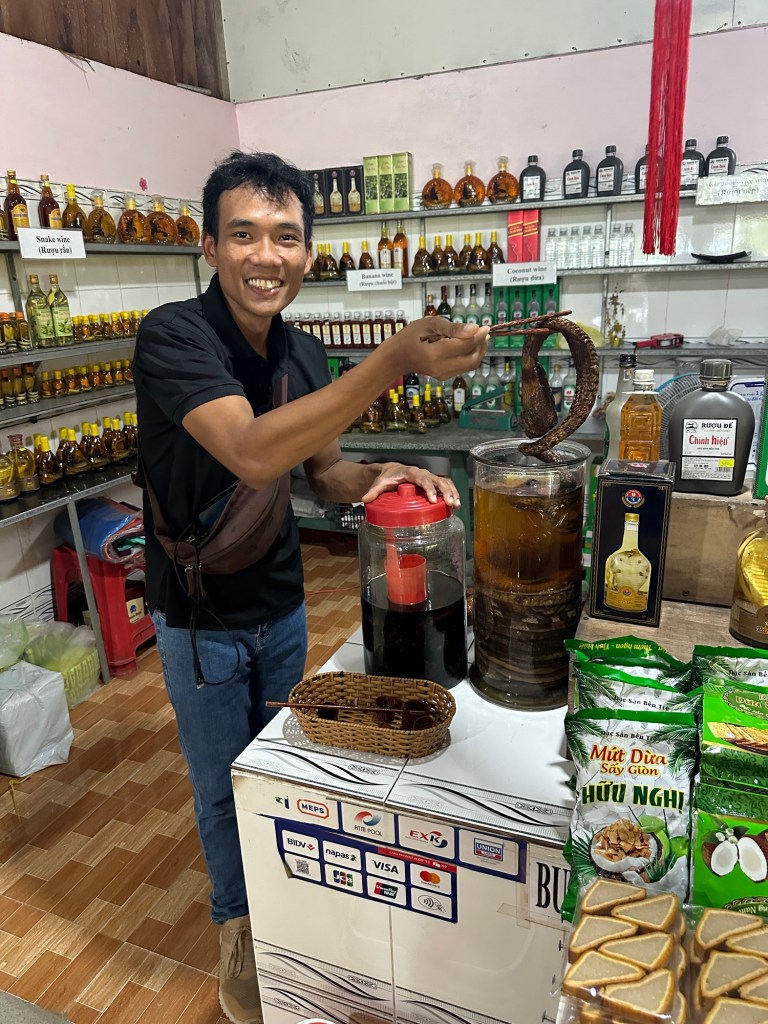
By the way, the banana wine was damned good too. I now need to find a snake wine stockist back home so that I have the defence that it is purely for medicinal purposes. Can anyone help me there?
Return to homepage

 A Dragon Apparent
Leave a comment